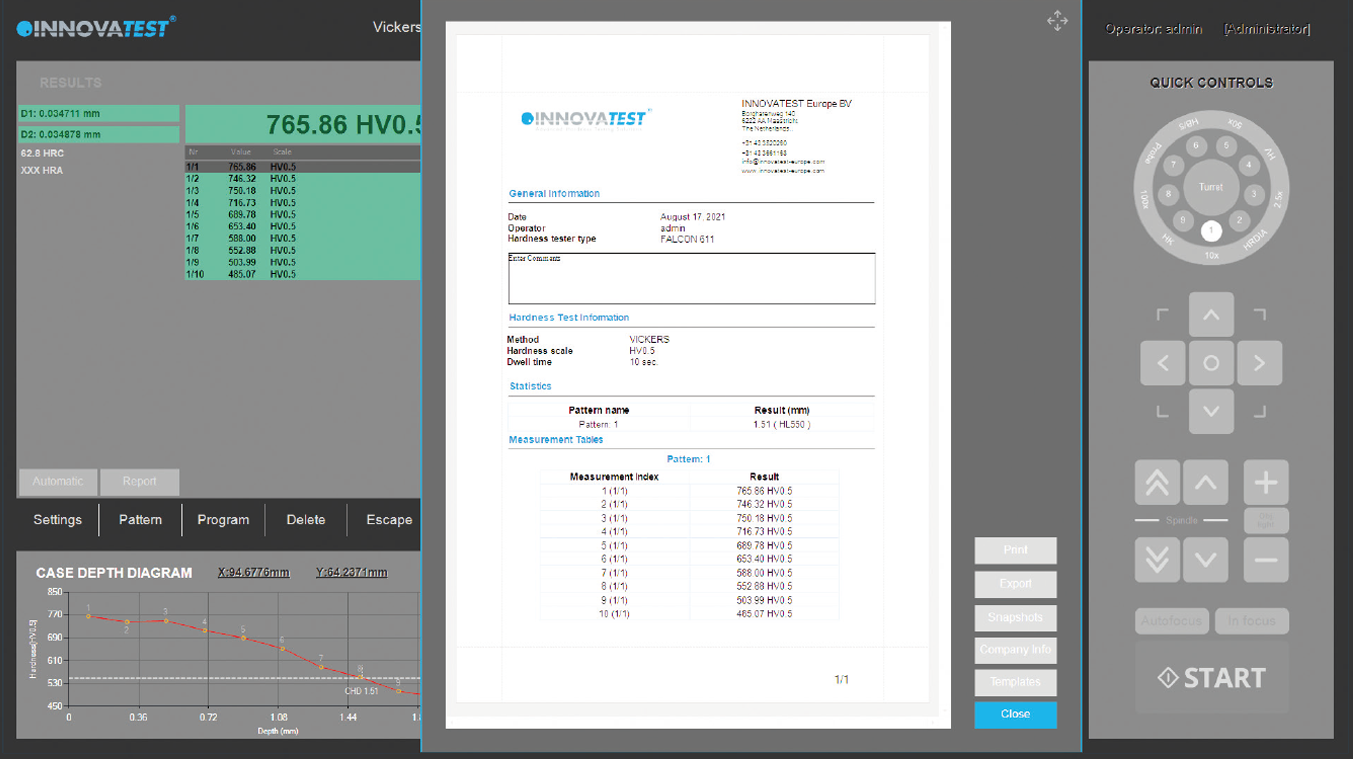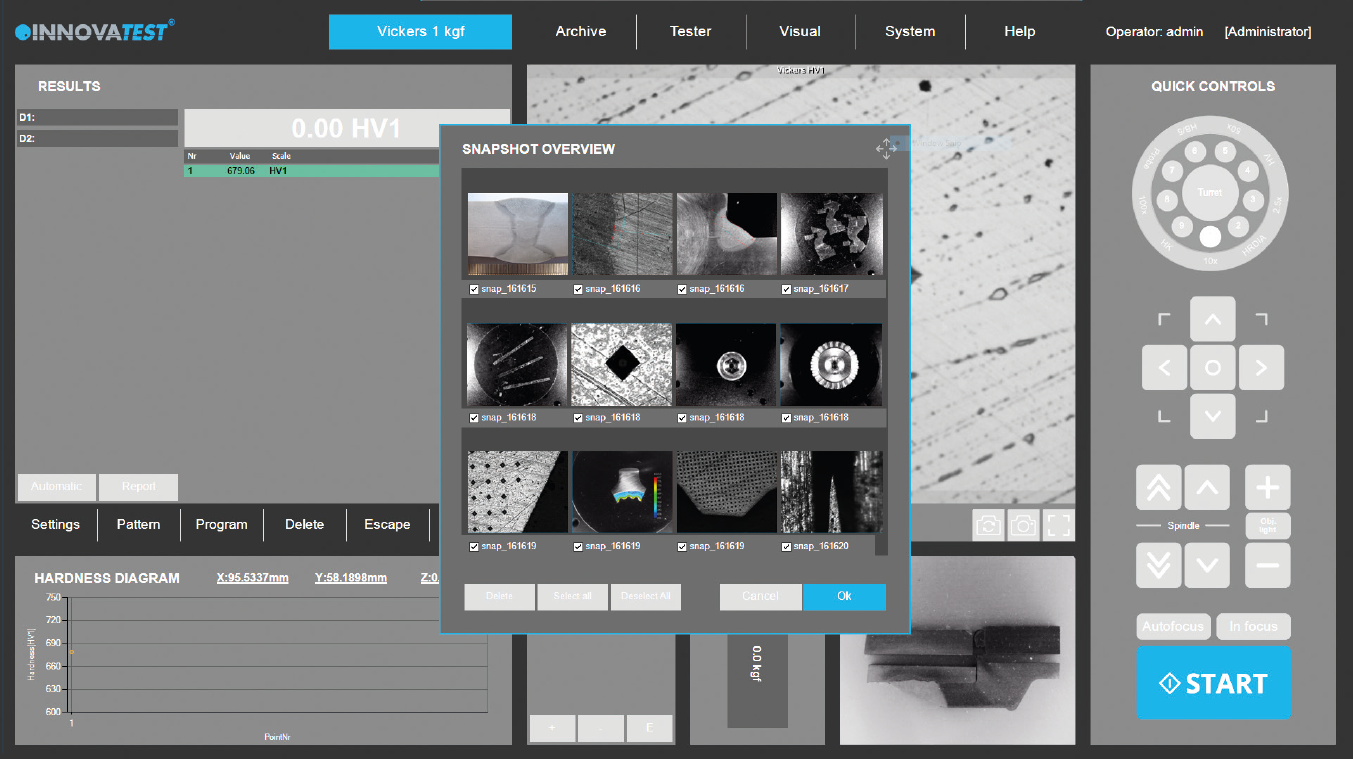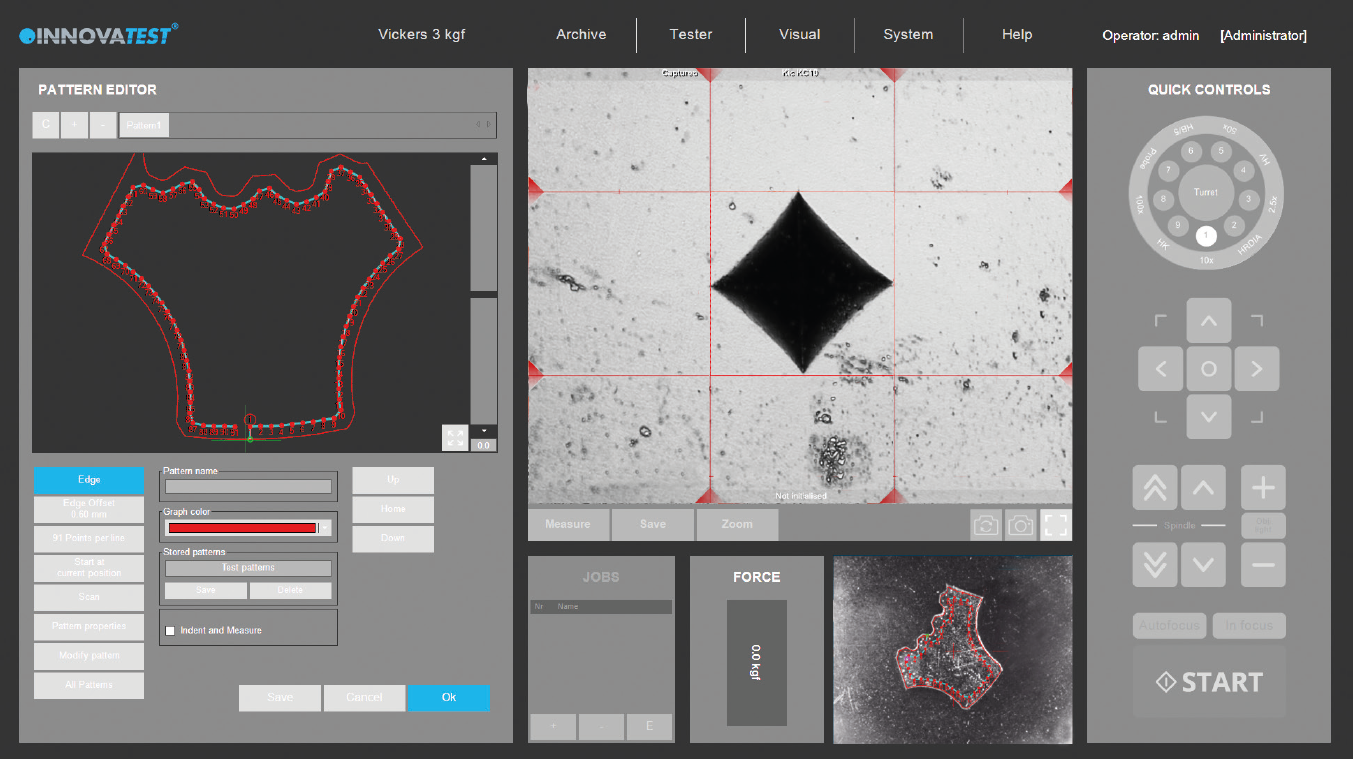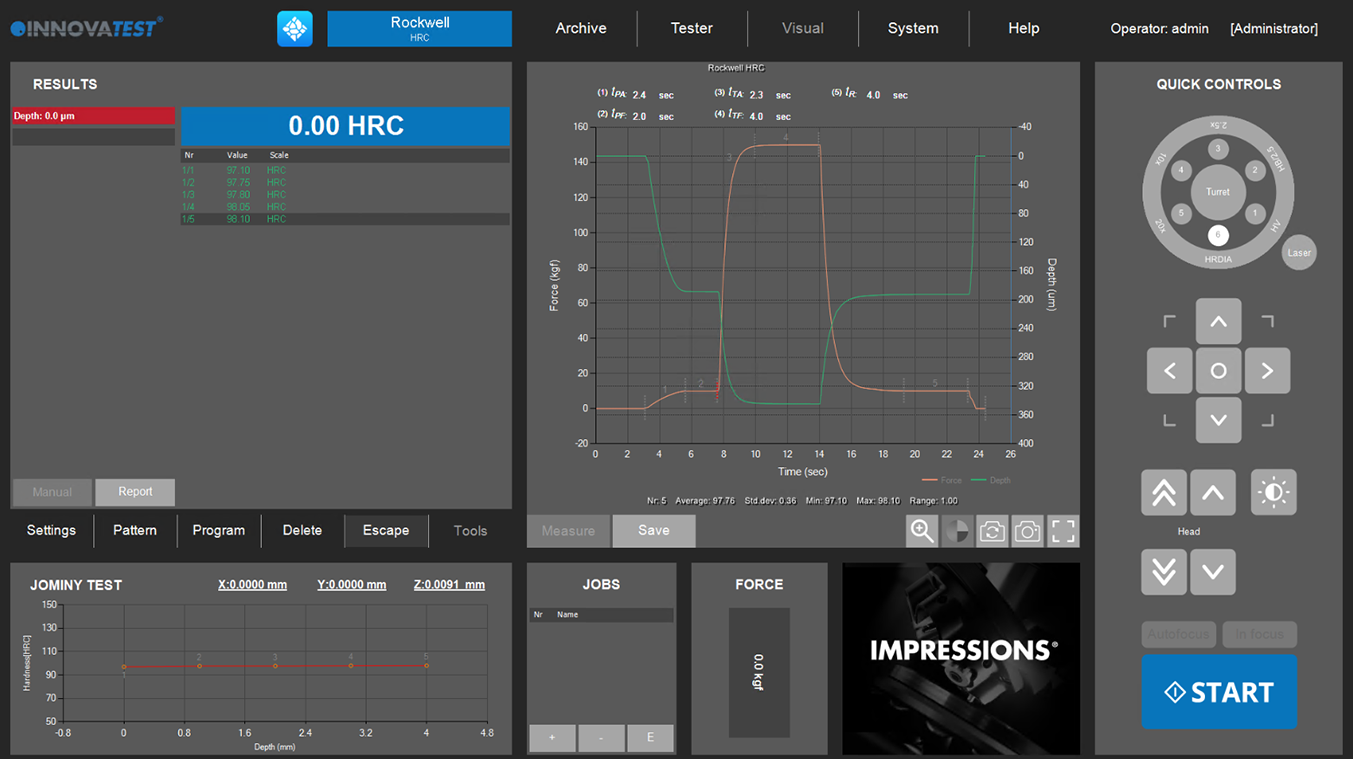



































Advanced Hardness Testing Software
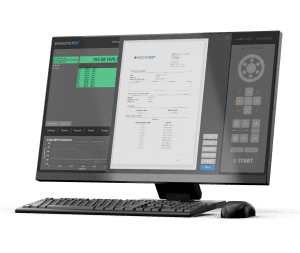
Our benchtop hardness testing software is engineered and designed to deliver precise, repeatable, and efficient results across a full range of applications, including Vickers hardness testing, Rockwell hardness testing, and Brinell hardness testing.
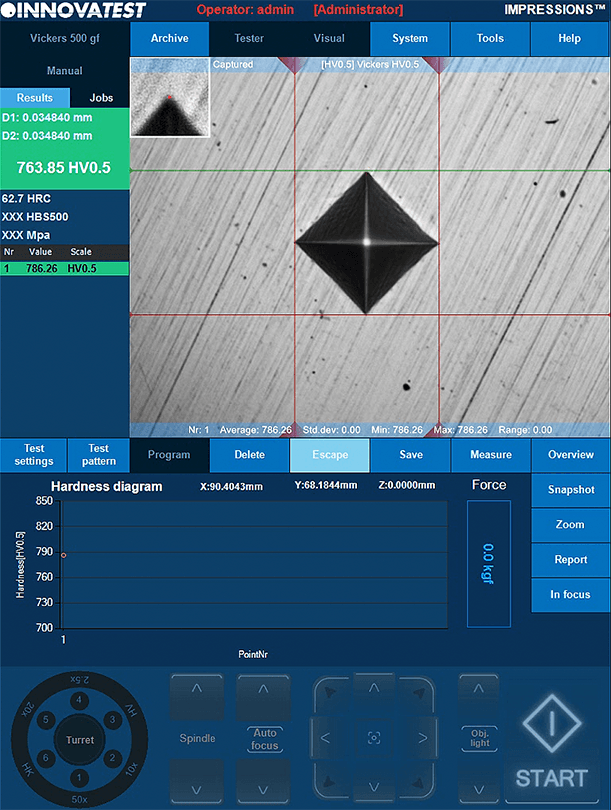
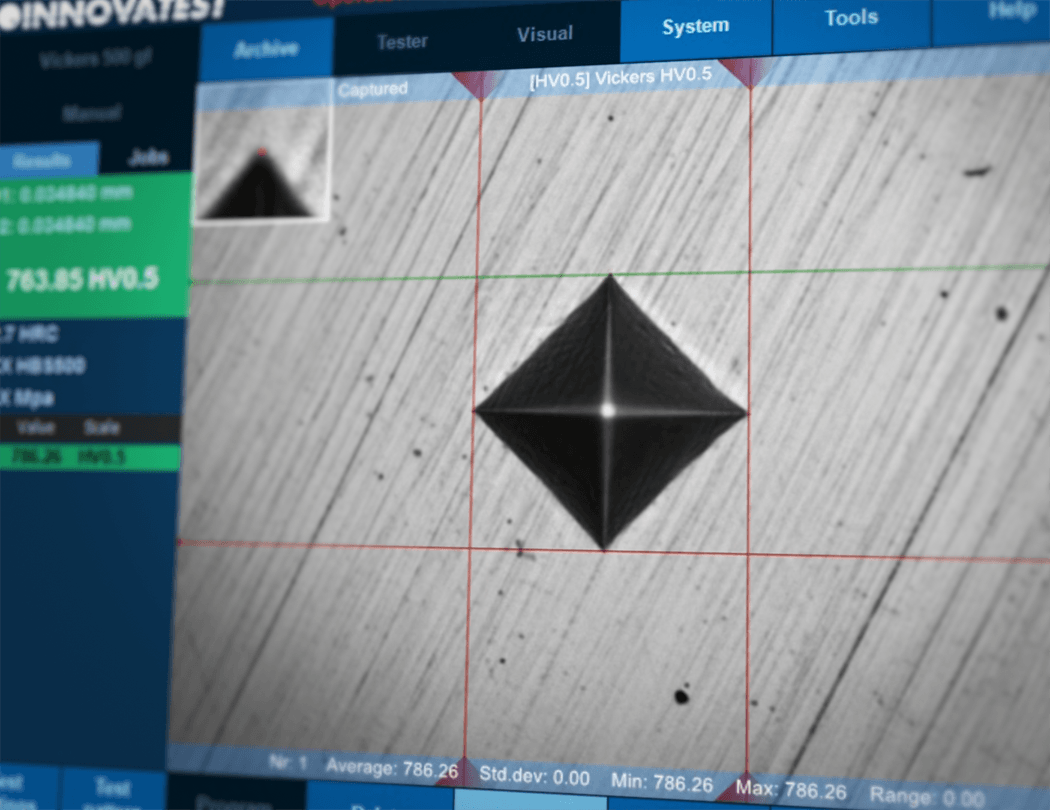
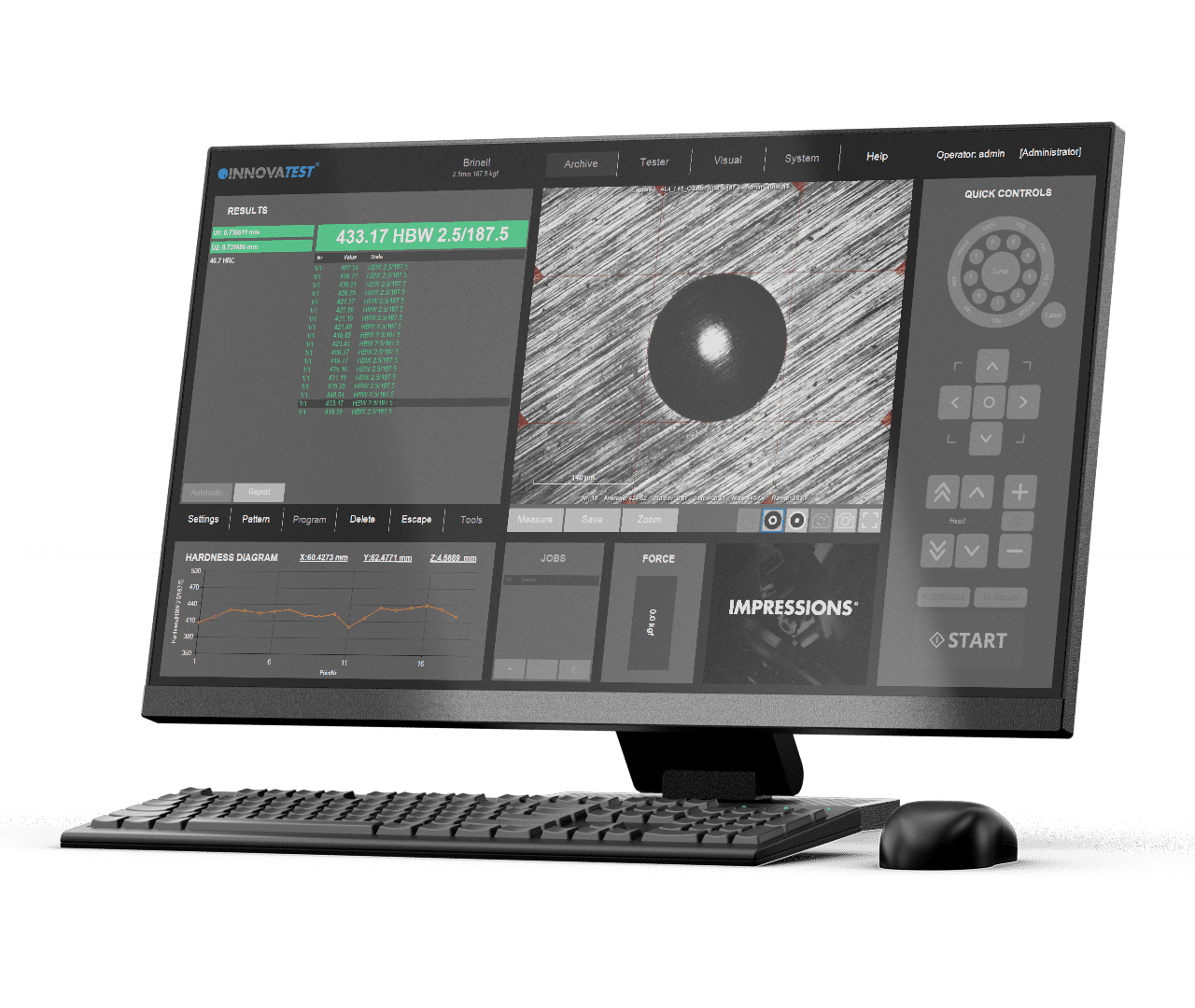
IMPRESSIONS™ Software is designed and built by INNOVATEST engineers to simplify the most complicated hardness testing requirements from many industries in the hardness testing field. Our GUI (Graphical User Interface) contains predesigned preferred applications, advanced workflow control, enhanced reporting and is very easy to learn.
Designed for modern laboratories and industrial environments, the software combines intuitive operation with advanced automation to streamline the entire hardness testing process—from indentation measurement to reporting and data analysis.
Whether for quality control, production, or research, our hardness tester software ensures accuracy, consistency, and compliance with international standards.
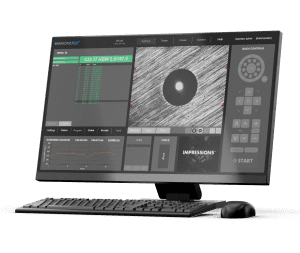
Intuitive Software for Faster, More Reliable Hardness Testing
Unlike traditional hardness tester software that can be complex and time-consuming, our solution is built for ease of use without compromising functionality.
This enables operators to perform hardness tests efficiently while minimizing training time and reducing human error.
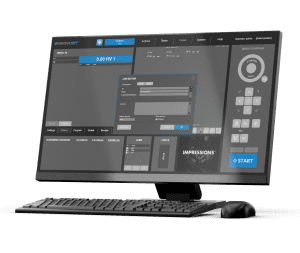
High-Precision Measurement for Vickers, Rockwell and Brinell Testing
Accuracy is critical in hardness measurement. Our software incorporates advanced algorithms and optical evaluation tools to deliver highly precise and repeatable results.
This ensures confidence in your hardness data across all testing methods.
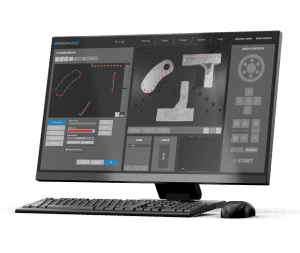
Automated Reporting and Comprehensive Data Management
Our hardness testing software simplifies data handling, allowing users to focus on analysis rather than administration.
These features support audit readiness, quality assurance processes, and seamless integration into your workflow.
Scalable Hardness Tester Software for Industrial and Laboratory Applications
Our software solutions are designed to meet a wide range of hardness testing requirements—from basic manual testing to fully automated measurement systems.
This scalability ensures long-term value and adaptability as your testing demands evolve.
Improve Efficiency, Accuracy and Compliance
By combining automation, precision, and ease of use, our benchtop hardness testing software helps organizations:
The result is a high-performance software solution that enhances productivity while supporting critical quality control processes.
AI-Powered Hardness Testing with IMPRESSIONS™ 4
Our IMPRESSIONS™ 4 software introduces advanced artificial intelligence (AI) technology to hardness testing, setting a new standard for accuracy in hardness measurement.
Traditional image processing methods used in hardness testing machines rely on clear indentation boundaries to deliver accurate results. However, in real-world applications—particularly when testing rough or uneven surfaces—these conventional approaches can be inadequate, leading to inconsistent or inaccurate hardness values.
IMPRESSIONS™ 4 overcomes these limitations through intelligent, AI-driven image analysis designed to perform with the same reliability as an experienced operator.
Advanced AI for Accurate Indentation Detection and Measurement
At the core of IMPRESSIONS™ 4 is a highly trained neural network developed specifically for automated AI indentation measurement.
While conventional hardness testing software depends on contrast and edge detection, our AI model is trained to recognize indentation patterns in complex, low-quality images.
This allows for consistent and reliable hardness results, even in challenging testing conditions where traditional systems may fail.

Trained for Precision, Optimized for Performance
The AI model integrated into IMPRESSIONS™ 4 has been developed by INNOVATEST using extensive research and advanced computational methods.
Once trained, the system performs real-time analysis (“inference”) directly on the hardness tester, requiring no external processing power.
Powered by high-performance hardware, including modern multi-core processors, the software delivers fast and efficient AI-based measurements without compromising system responsiveness.
Intelligent Image Analysis with Automated Edge Detection
During operation, the AI engine processes each indentation image and automatically generates a precise measurement mask.
This approach ensures that even shallow indents or low-visibility impressions are correctly detected and measured, improving overall test reliability.

Superior Performance Over Conventional Methods
IMPRESSIONS™ 4 AI technology designed by INNOVATEST significantly outperforms traditional hardness testing software and optical methods.
By combining artificial intelligence with advanced hardness testing software, IMPRESSIONS™ 4 delivers a smarter, more robust solution for modern material testing environments.
Metalloscope™ – Advanced Metallography Software for Microstructure Analysis
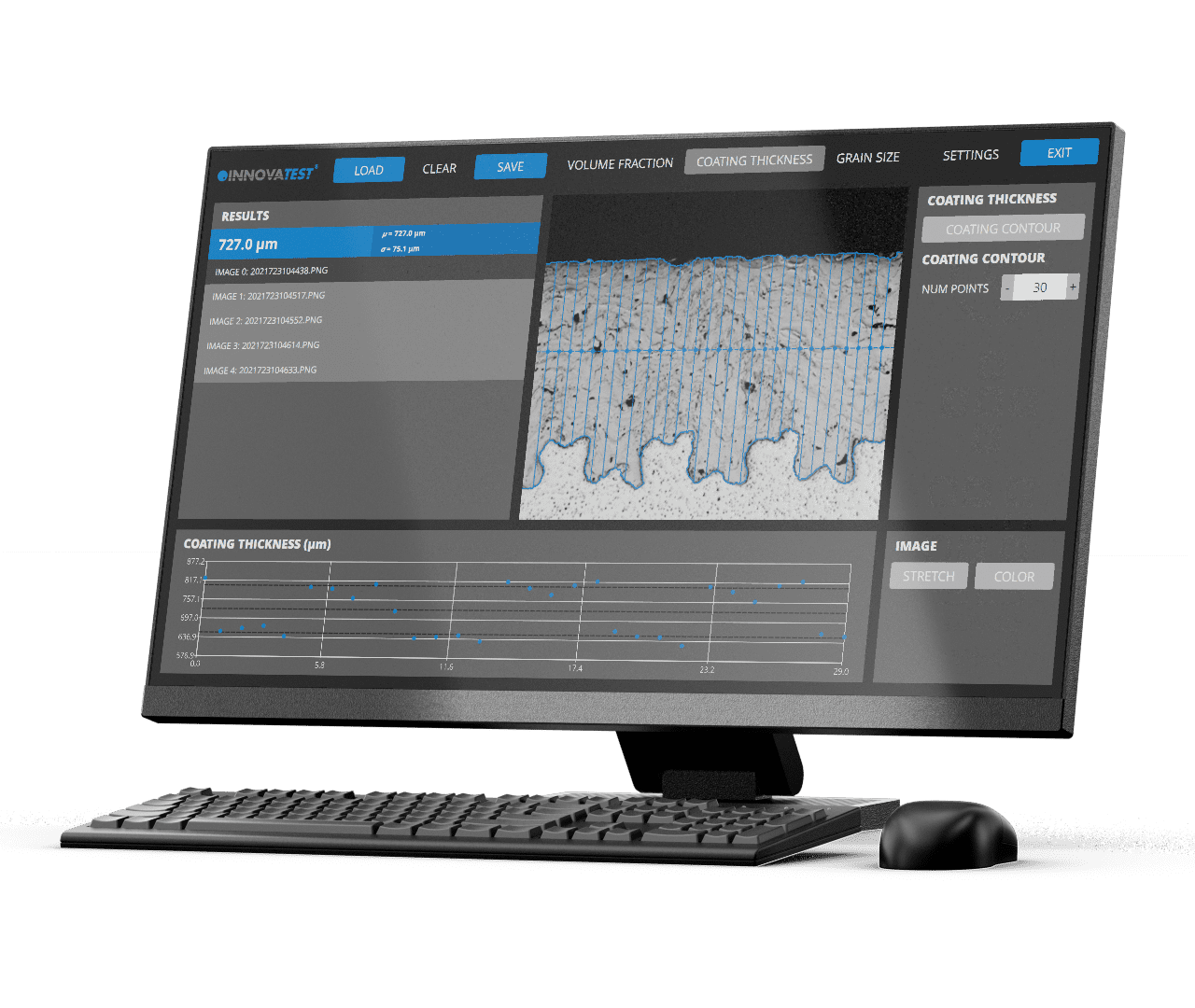
Metalloscope™ is a powerful software module within our hardness testing platform, designed to deliver accurate and efficient metallographic analysis directly from your benchtop system.
Microscopy is an essential tool in every metallographic laboratory—whether for failure analysis, material development, or quality control. Metalloscope™ extends the capabilities of your hardness tester by enabling precise, standards-compliant evaluation of metal microstructures.
From routine inspections to advanced research applications, this module provides reliable, quantitative results for a wide range of materials, including steel, iron, copper, titanium, and complex alloys.
Integrated Metallography and Hardness Testing
Metalloscope™ seamlessly combines hardness testing and metallurgical microscopy into a single, efficient workflow.
This integration improves efficiency while maintaining high levels of measurement accuracy and repeatability.
Quantitative Microstructure Analysis for Reliable Results
Understanding the microstructure of metals is critical, as it directly influences key material properties such as strength, durability, and corrosion resistance.
Metalloscope™ enables detailed and quantitative evaluation of these microstructures using advanced image analysis tools.
This ensures consistent and reliable metallographic data for decision-making and compliance.
Standards-Compliant Metallographic Measurements
Metalloscope™ is designed to meet internationally recognized metallography standards, ensuring your results are accurate, traceable, and audit-ready.
Supported measurements include:
By adhering to these standards, the software supports critical applications in regulated industries such as aerospace, automotive, and metal production.
Versatile Metallography for a Wide Range of Materials
Metalloscope™ is suitable for the analysis of a broad spectrum of metallic materials and applications.
This versatility makes it an ideal solution for laboratories focused on material development, failure investigation, and production quality assurance.
Improve Insight into Material Performance
By combining high-resolution microscopy with advanced analysis software, Metalloscope™ provides deeper insight into material behavior and performance.
The result is a comprehensive metallography solution that enhances both analytical capability and operational efficiency.
Environmental Monitoring for Reliable Hardness Testing Results
Accurate hardness testing depends not only on the machine and software, but also on the surrounding environment. Our integrated environmental monitoring system continuously tracks key conditions to ensure consistent and reliable hardness measurement results.
By combining vibration, temperature, and humidity monitoring, our systems protect against external influences that can negatively impact test accuracy—particularly in demanding industrial environments.
Real-Time Vibration Monitoring for Stable Measurements
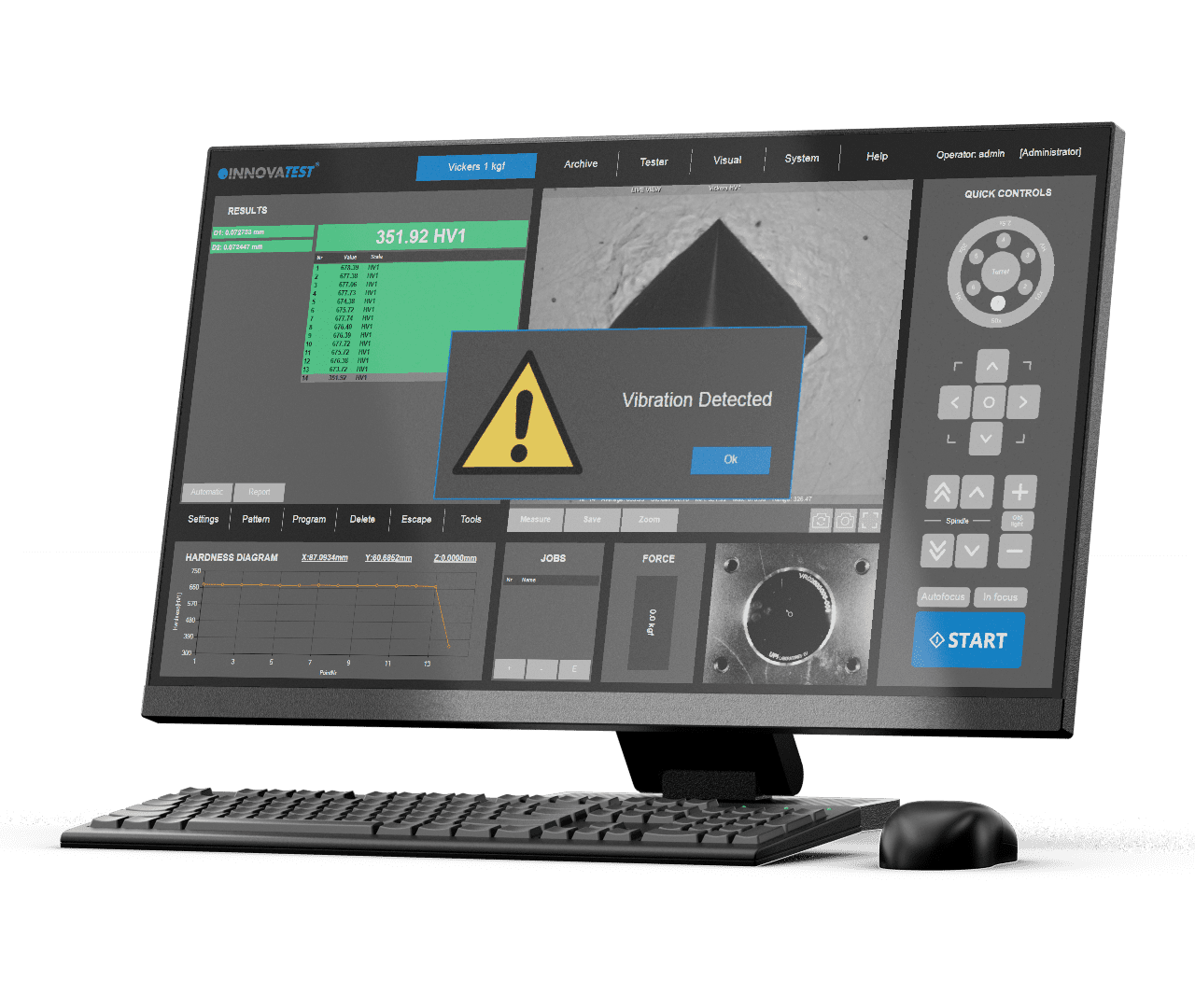
Even with built-in vibration isolators, external disturbances can affect hardness testing accuracy. Industrial environments often introduce unwanted vibrations from nearby equipment and infrastructure.
Our integrated high-precision accelerometer continuously monitors machine stability and detects disruptive conditions in real time.
This ensures that every measurement is performed under stable and controlled conditions.
Protection Against Environmental Disturbances
In certain regions, environmental factors such as minor seismic activity or continuous ground vibrations can impact sensitive measurement systems.
Our vibration monitoring system is designed to detect these subtle disturbances and respond accordingly.
This is particularly valuable for installations in areas with frequent low-level seismic activity or unstable foundations.
Temperature and Humidity Control for Measurement Accuracy
Environmental conditions such as temperature and humidity can directly affect both the hardness tester and the material being tested.
Our system continuously monitors these parameters to maintain optimal testing conditions.
This ensures consistent performance, even in environments with fluctuating climate conditions.
Designed for Real-World Industrial Environments
Modern production environments are subject to increasing environmental variability, including extreme heat, cold, and humidity. These factors can compromise measurement accuracy if not properly controlled.
Our environmental monitoring solution is engineered to address these challenges:
Ensuring Accuracy in a Changing Climate
As environmental conditions become more unpredictable, maintaining measurement integrity is more important than ever. Our systems are designed to mitigate the effects of climate variability and external disturbances on hardness testing processes.
By actively monitoring and responding to environmental changes, we help ensure that your hardness testing results remain accurate, repeatable, and compliant—regardless of location or operating conditions.
Barcode & QR Code Integration for Automated Hardness Testing
Our Barcode and QR Code module enhances your hardness testing workflow by enabling seamless data integration, improved traceability, and increased efficiency across Rockwell, Brinell, and Vickers hardness testing applications.
Fully integrated with IMPRESSIONS™ software and our benchtop hardness testing machines, this module supports automated data input, batch hardness testing, and high-throughput testing environments—reducing manual input and minimizing operator error.
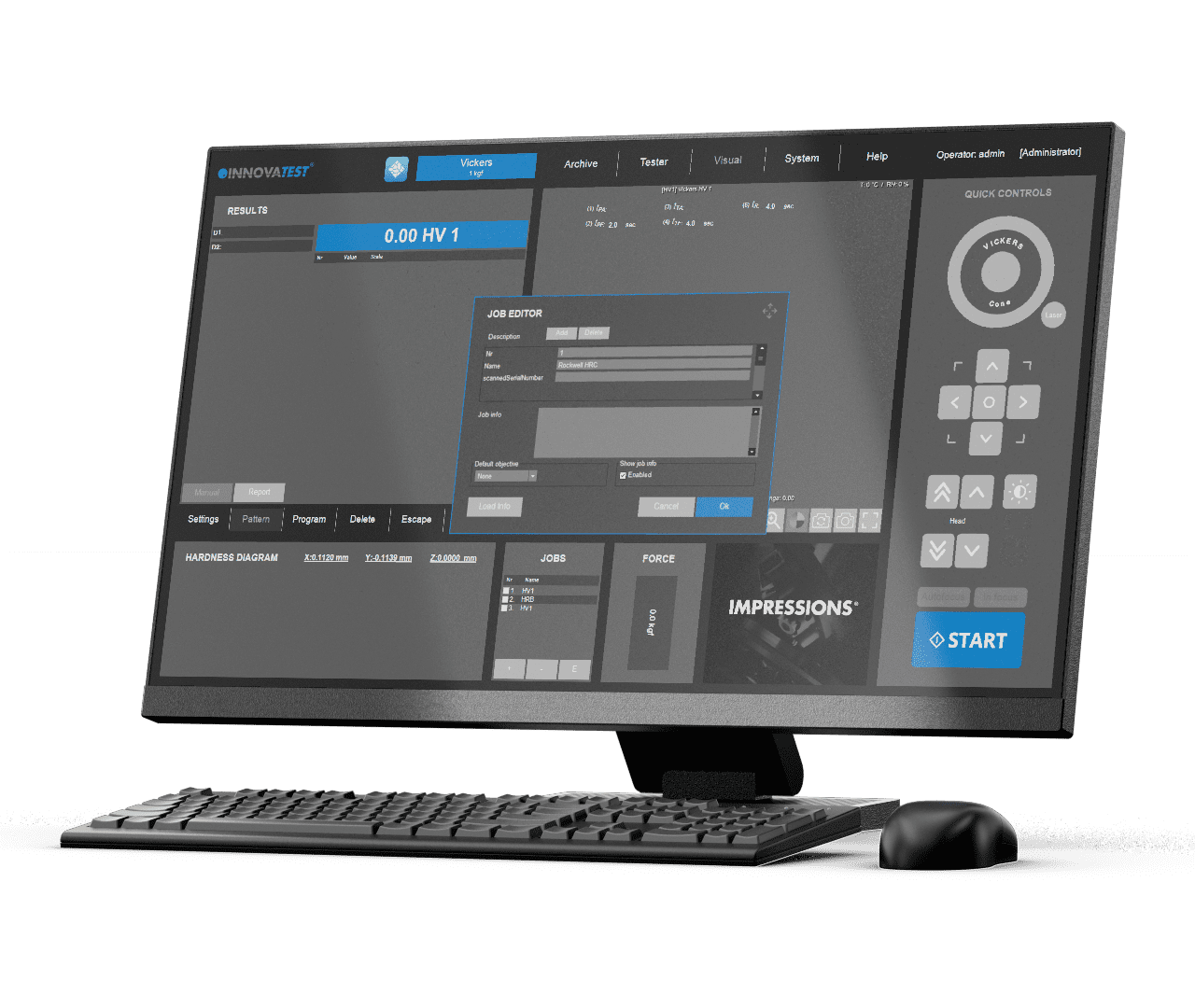
Streamlined Data Entry for High Throughput Testing
Manual data entry can slow down testing processes and introduce errors, especially in high-volume production environments. The Barcode & QR Code module automates this process by directly loading sample data into predefined user fields.
This significantly improves efficiency and supports consistent operation in high-throughput testing environments.
Seamless Integration with IMPRESSIONS™ Software and Databases
The module connects directly to IMPRESSIONS™ software, enabling full integration with your existing digital infrastructure.
By linking your hardness tester to your network environment, the system ensures that all test data is accurately recorded and easily accessible for analysis and reporting.
Intelligent Automation for Batch and Production Testing
Designed for modern manufacturing environments, the Barcode & QR Code module enables fully automated workflows for batch hardness testing and production quality control.
This level of automation reduces operator involvement while increasing consistency and repeatability across large testing volumes.
Reliable Scanning in Challenging Industrial Conditions
Our system is engineered to perform reliably even in demanding applications where marking quality may vary.
This ensures dependable data capture, even in complex real-world manufacturing scenarios.
Improved Traceability and Quality Assurance
With automated data handling and system integration, the Barcode & QR Code module strengthens your quality control processes.
This is essential for industries requiring strict quality standards and documentation, such as aerospace, automotive, and precision engineering.
Optimized for Modern Automated Testing Environments
By combining automation, digital integration, and intelligent data handling, our Barcode & QR Code module transforms traditional hardness testing into a fully connected process.
The result is a faster, more reliable, and scalable solution that supports high throughput hardness testing, reduces operational complexity, and improves overall productivity.
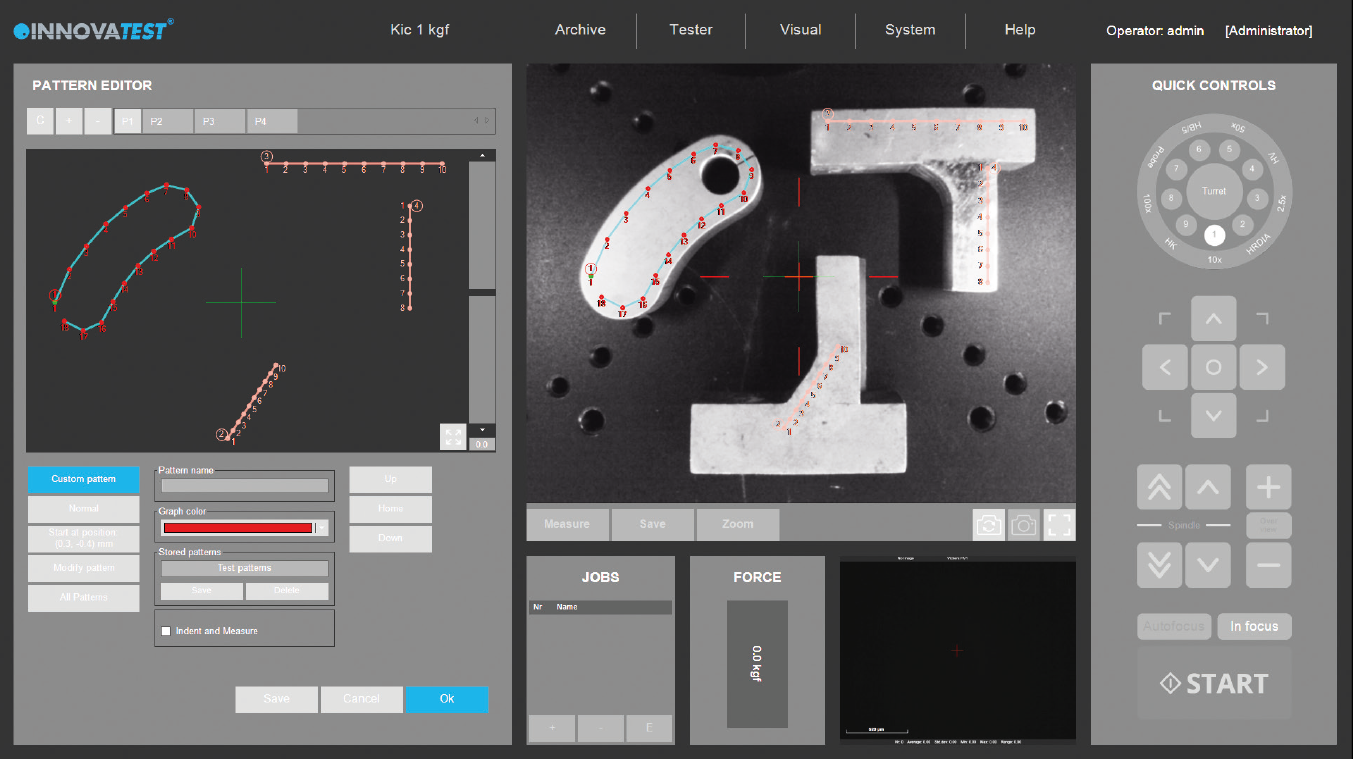
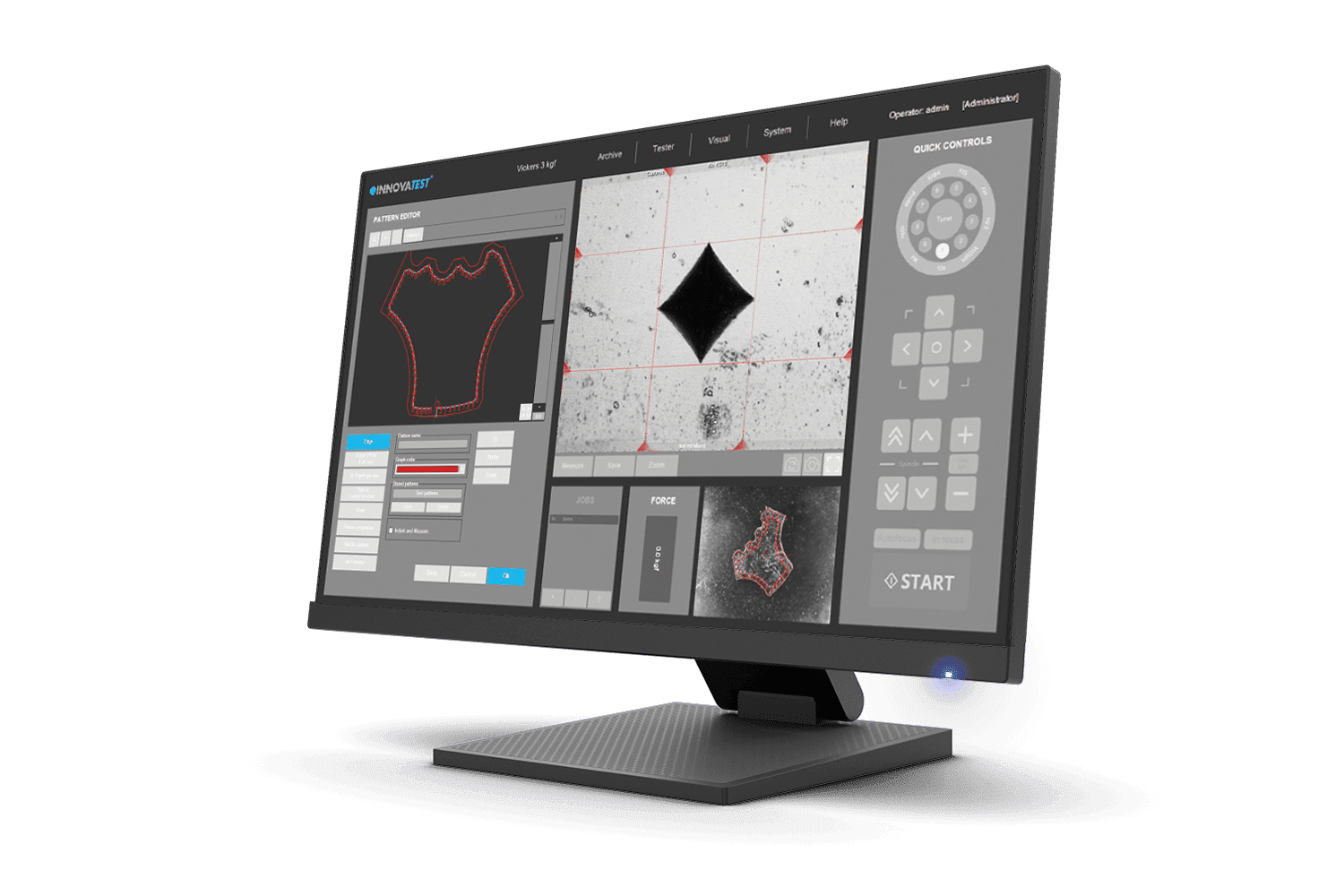
Test Pattern Editor for Automated Multi-Point Hardness Testing
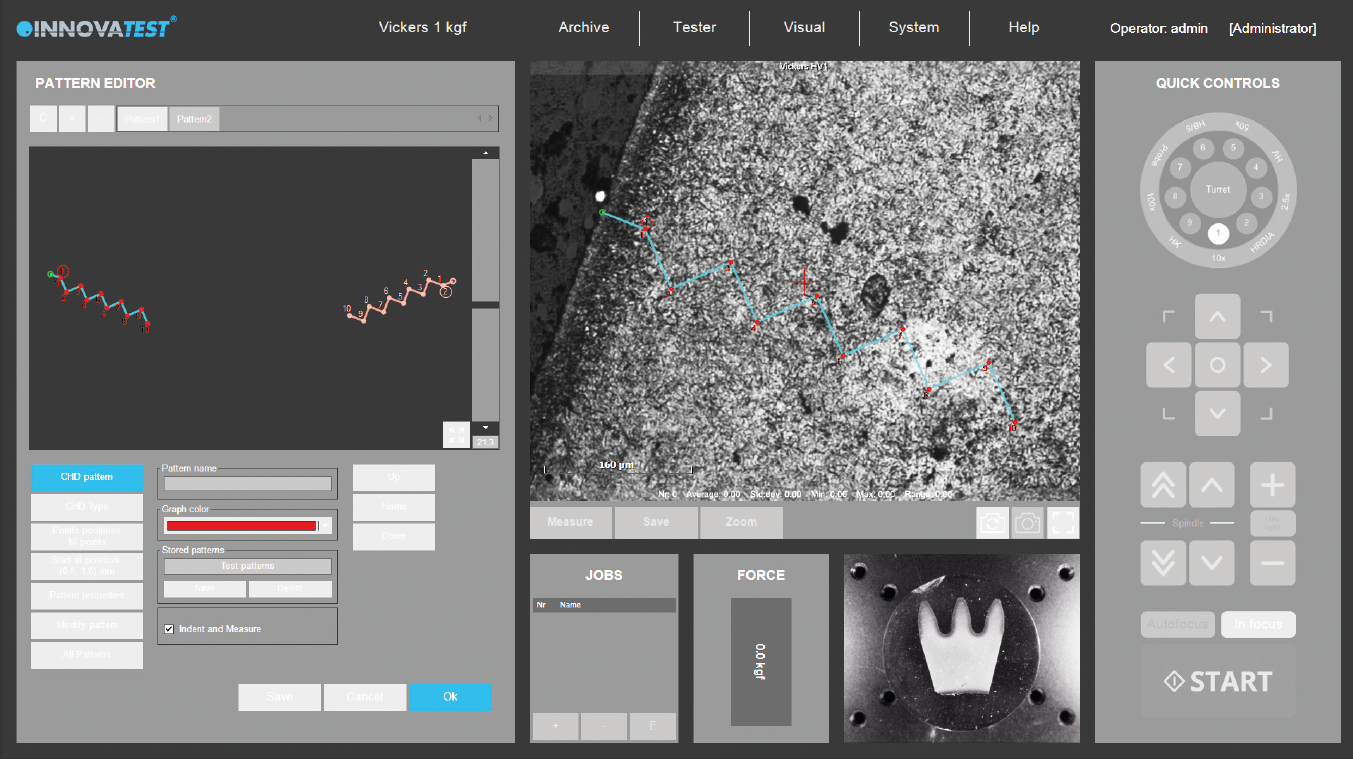
The IMPRESSIONS™ Test Pattern Editor is a powerful software module designed to simplify and automate multi-point hardness testing across Rockwell, Brinell, and Vickers applications.
Built for high-efficiency laboratories and production environments, this module enables users to create, manage, and execute complex test patterns with precision—supporting batch hardness testing, automated workflows, and high throughput testing requirements.
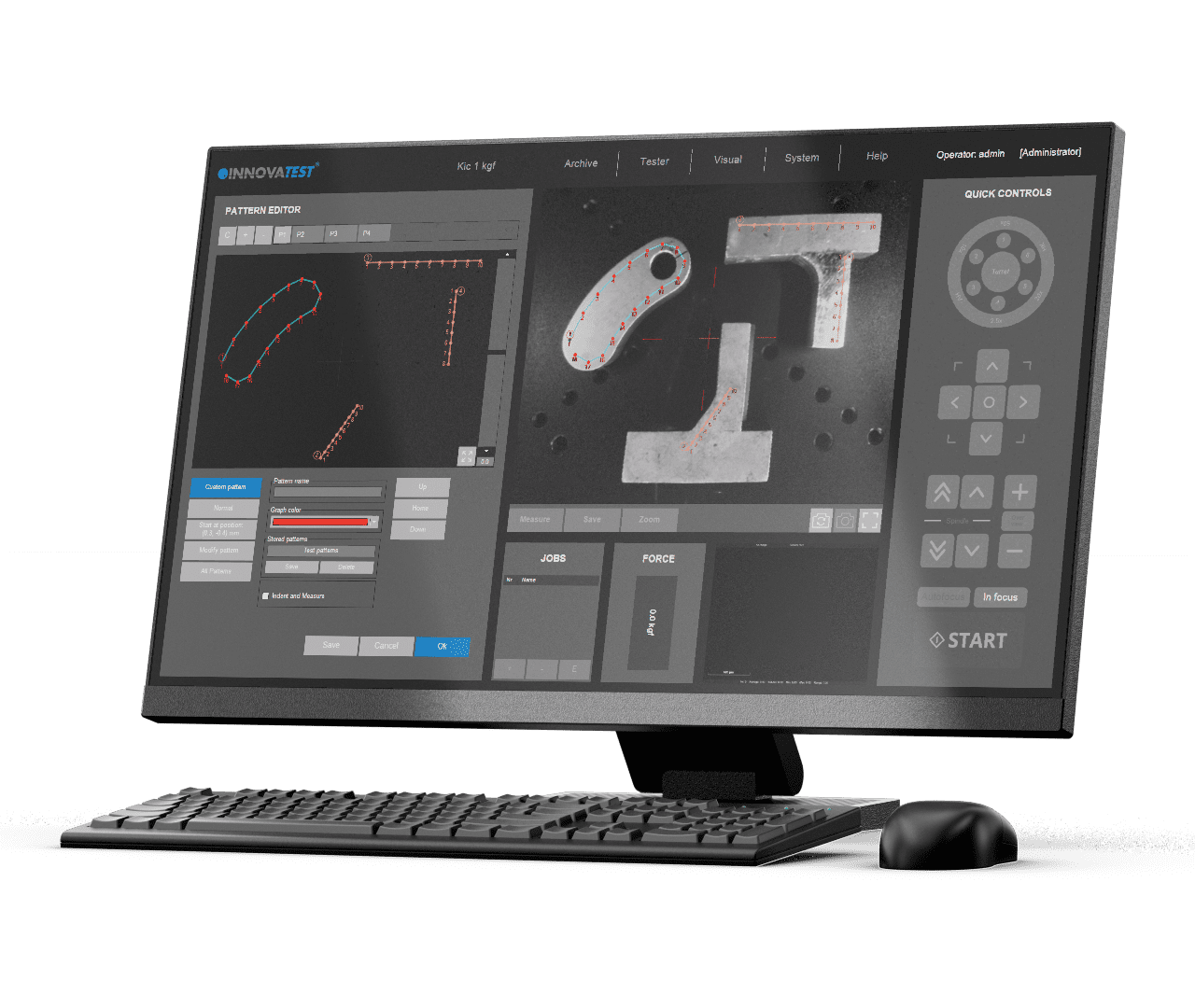
Flexible Pattern Creation for Complex Testing Applications
The Test Pattern Editor provides complete flexibility in designing test sequences tailored to your sample geometry and testing requirements.
This flexibility makes it ideal for advanced material analysis and production quality control.
Automated Multi-Point Testing for High Throughput Environments
Manual positioning and testing can be time-consuming and prone to variability. The Test Pattern Editor enables fully automated execution of predefined test sequences.
This significantly improves productivity and supports high throughput hardness testing in industrial environments.
Live Vision Technology for Accurate Pattern Placement
The module features advanced live vision capabilities, allowing users to position test patterns directly on the sample surface.
This ensures precise alignment of test patterns, even on complex or irregular sample geometries.
Drag-and-Drop Workflow for Efficient Operation
Ease of use is central to the IMPRESSIONS™ software design. The Test Pattern Editor includes intuitive tools to streamline workflow management.
This reduces setup time and simplifies operation for both new and experienced users.
Full Traceability with Customizable Test Point Identification
Each test point within a pattern can be individually labeled and tracked, supporting detailed analysis and reporting.
This functionality is essential for applications requiring detailed documentation, such as failure analysis, research, and regulated quality control processes.
Automated vs Manual Hardness Testing
Traditional manual hardness testing methods require operators to position each test point individually, increasing the risk of inconsistency and reducing overall efficiency.
The IMPRESSIONS™ Test Pattern Editor provides a clear advantage through automation:
Manual Testing Limitations:
Automated Testing with IMPRESSIONS™:
By replacing manual processes with intelligent automation, the Test Pattern Editor significantly improves productivity, accuracy, and data consistency.
Optimized for Key Hardness Testing Applications
The IMPRESSIONS™ Test Pattern Editor is designed to support a wide range of real-world applications, making it a versatile solution for both laboratories and industrial environments.
Weld Testing
Perform precise hardness traverses across weld seams and heat-affected zones (HAZ) with automated, evenly spaced test patterns.
Case Depth Analysis
Create linear or complex patterns to measure hardness gradients and determine effective case depth in carburized or hardened materials.
Coating Thickness and Surface Treatments
Analyze coatings and surface layers with controlled test positioning and variable force application.
Material Research and Development
Execute complex testing routines on new materials and alloys with repeatable, high-precision patterns.
Optimized for Automated and Batch Hardness Testing
By combining flexible pattern creation, automation, and intelligent software design, the IMPRESSIONS™ Test Pattern Editor transforms traditional hardness testing into a highly efficient process.
The result is a scalable solution that enhances productivity, accuracy, and data reliability in modern hardness testing environments.
Image Stitching for Large-Area Hardness Testing Analysis
Our image stitching functionality extends the visual capabilities of your hardness testing system by combining multiple images into a single, high-resolution overview of your sample.
When the required viewing area exceeds the optical zoom range, the system automatically scans and stitches images together to create a detailed, seamless representation of the test surface. This enables accurate positioning, analysis, and reporting across larger samples in Rockwell, Brinell, and Vickers hardness testing applications.
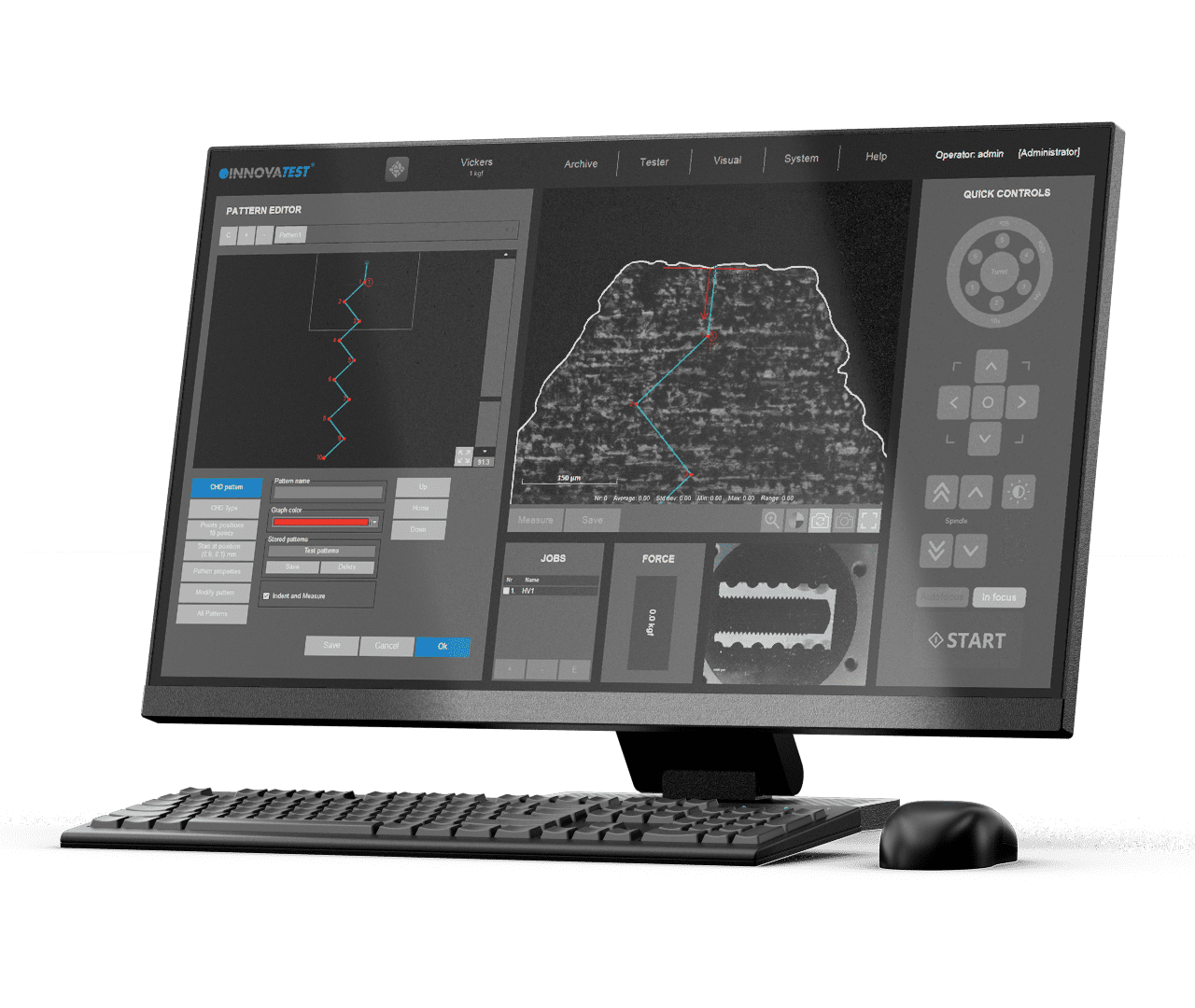
High-Resolution Overview for Accurate Test Positioning
Image stitching allows users to generate a complete view of the sample stage, providing greater context for test planning and evaluation.
These stitched images can be directly used within IMPRESSIONS™ software for automated test pattern creation and multi-point hardness testing.
Enhanced Reporting and Documentation
Stitched images provide clear and comprehensive visual documentation of your testing process.
This is particularly valuable for industries requiring detailed reporting and verification of test results.
Applications of Image Stitching in Hardness Testing
Image stitching is essential in a variety of hardness testing scenarios where larger sample areas or detailed overviews are required:
Optimized for Automated and High Throughput Testing
By integrating image stitching with automated workflows, the system enables faster setup and more efficient testing across large or complex samples.
The result is improved accuracy in test placement, enhanced reporting capabilities, and greater efficiency in batch hardness testing and high throughput environments.
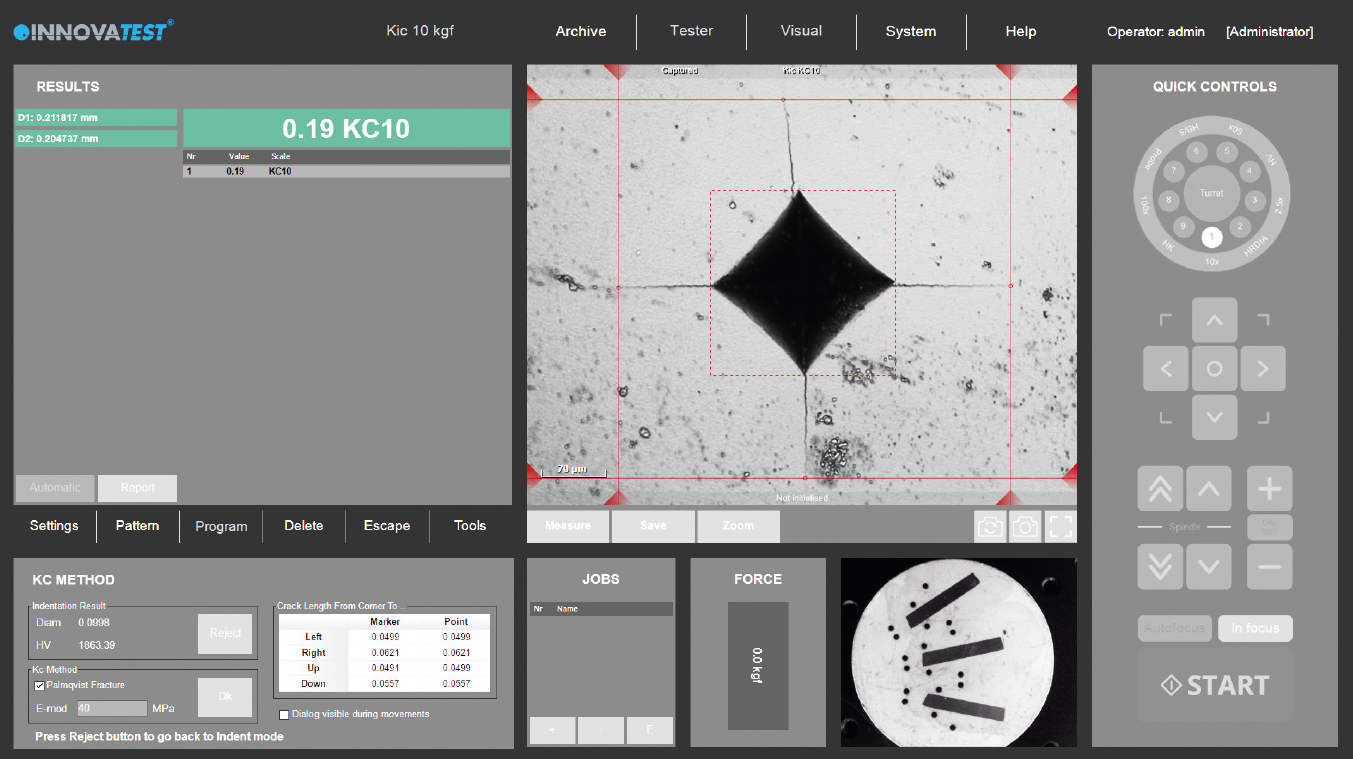
KIC Crack Measurement for Fracture Toughness Analysis
Our KIC Crack Measurement module extends the capabilities of your hardness testing system beyond standard indentation testing, enabling advanced analysis of fracture toughness, crack propagation, and material behavior.
Designed for laboratories and research environments, this module supports accurate and repeatable KIC fracture toughness testing using indentation-based methods within Vickers hardness testing applications.
By combining precision imaging, automated calculations, and standards-based reporting, the software provides reliable insight into how materials respond to stress, fatigue, and crack growth.
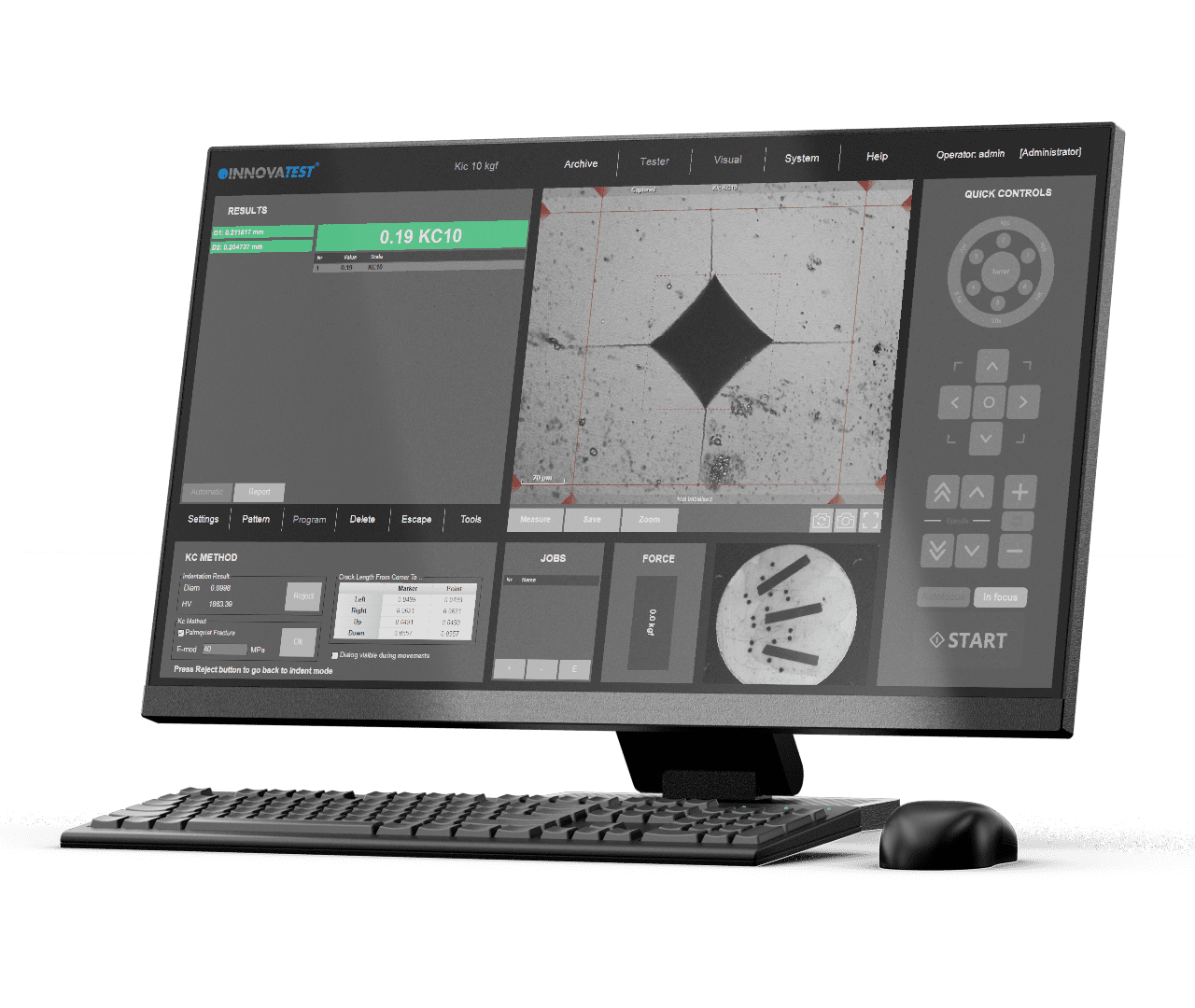
Advanced Crack Detection and Measurement Under Load
The KIC module enables precise detection and evaluation of cracks formed during hardness testing, even under applied load conditions.
This allows users to perform detailed fracture analysis with confidence and repeatability.
Standards-Compliant KIC Testing
The software is fully configured to perform fracture toughness calculations in accordance with internationally recognized standards, ensuring reliable and comparable results.
By embedding these standards directly into the software, the system ensures that all measurements, calculations, and outputs align with required testing methodologies.
Embedded KIC Calculations for Accurate Results
All required KIC fracture toughness calculations are fully integrated within the software, eliminating manual data processing and ensuring consistent application of formulas.
For indentation-based fracture toughness testing, commonly applied models include:
Palmqvist Crack Model (ISO 28079)
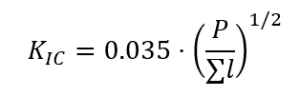
Where:
Median / Radial Crack Model
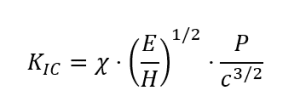
Where:
These calculations are automatically executed by the software, ensuring:
Customized Reporting Aligned with Industry Standards
The KIC module includes advanced reporting tools designed to match the output requirements of ISO and ASTM standards.
This ensures that all fracture toughness results are presented in a clear, standardized, and audit-ready format.
Automated vs Traditional Fracture Toughness Testing
Traditional fracture toughness testing methods—such as compact tension (CT) or single-edge notch bending (SENB) tests—are often complex, time-consuming, and require specialized sample preparation.
The KIC module provides a more efficient alternative:
Traditional Methods (ASTM E1820 – Mechanical Testing)
Indentation-Based KIC Testing with IMPRESSIONS™
This makes indentation-based KIC testing a highly efficient solution for both research and industrial applications.
Applications of KIC Fracture Toughness Testing
KIC crack measurement is critical in industries where understanding material performance under stress is essential.
Reliable and Reproducible Fracture Analysis
By integrating crack detection, standardized calculations, and automated reporting, the KIC module transforms complex fracture toughness testing into a streamlined and repeatable process.
The result is a powerful, efficient, and scalable solution for fracture toughness testing, crack growth analysis, and advanced material characterization—all within a single hardness testing platform.
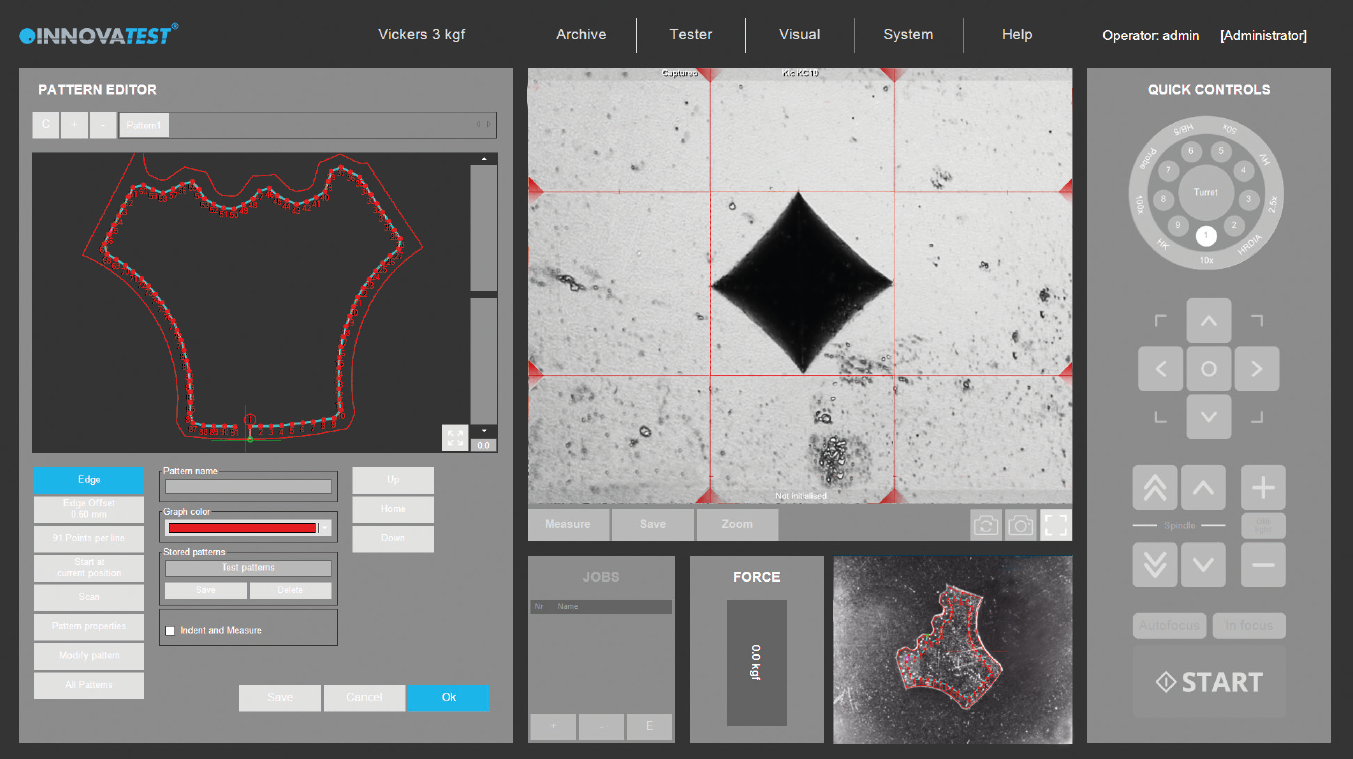
Automatic Contour Scanning is an INNOVATEST software application that enables an automated solution for scanning the edges of a sample before hardness testing. It is used to accurately trace the edge profile of irregular-shaped components without having to manually reposition or select an edge. The system automatically scans the entire outline of a sample, and the resulting contour scan can be saved. The resulting scanned contour can be used as a basis for 2D and 3D hardness mapping applications.
The hardness tester is fitted with a high-resolution camera and motorised automatic stage that enables high-speed sample scanning, which captures the outline or contour of the test object’s edge and contours..
After the sample outline scanning process, 2D and 3D hardness mapping can be performed. The scanned contour acts as a guide for the hardness tester, which will use the scanned contour area as the basis for subsequent 2D and 3D hardness mapping applications (Plane Hardness Charts). The chart reveals how the hardness decreases from the surface inward (case depth) or if any zones were missed.
Ensures that indentations are made within the edges and contours of an irregularly shaped sample.
Reduces manual labour and human error, and speeds up large sample area hardness testing and 2D and 3D hardness mapping processes.
Maintains uniform distances between measurement points within the confines of the edges of the sample contours.
Generates heatmaps or hardness profiles, which can be used for quality control, process validation, or failure analysis.
Checking hardness across base metal, heat-affected zone (HAZ), and weld metal.
Measuring surface and case hardness across curved teeth.
Confirming uniformity of hardening or tempering across 3D parts.
Evaluating hardness across coated or plated surfaces with complex geometries.
Backed by a wealth of expertise in hardness testing, INNOVATEST has been at the forefront of developing new and efficient ways to get precise results for automated applications. Our Automatic Contour Scanning software has been developed by our in-house R&D department and is easy to use when combined with the right hardware features. Automatic Contour Scanning software is available for specific INNOVATEST machines which are equipped with our IMPRESSIONS software package. The system requires an overview camera and motorized stage to function automatically..
Get our Automatic Contour Scanning software today and transform your business.
The most accurate method of contour plotting in hardness testing is automated contour scanning using a high-resolution camera system and an automatic CNC motorized stage. This generates a precise digital map of the sample’s surface geometry, no matter how complex, and ensures that subsequent hardness measurements are taken within the confines of the edges of the sample. Automatic Contour Scanning is very useful for achieving consistent, accurate 2D and 3D hardness mapping results on irregularly-shaped samples and components.
Automatic Contour Scanning is an advanced method used in hardness testing to automatically trace the outer edge of an irregularly shaped sample. The system scans the contour of the sample, automatically plots a map of its edge, and saves the resulting contour scan.
Automatic Contour Scanning significantly improves testing efficiency by eliminating the need for manual hardness position plotting.. The system automatically scans the contours of the sample. This reduces testing time, minimises human error, and allows for rapid, consistent 2D and 3D hardness mapping processes.
Yes, with Automatic Contour Scanning and hardness mapping, you can precisely define test points at fixed distances from the sample edge or within the sample area.
Yes, Automatic Contour Scanning is fully compatible with 2D and 3D hardness mapping. It enables accurate data collection across flat planes (for plane hardness charts) and complex 3D surfaces. The collected data can be used to generate heatmaps and hardness profiles for quality control, process validation, and material evaluation.
Embedded metallurgical samples with unique shapes and contours are the most suitable samples for automatic contour scanning.
The functionality is also ideal for multiple-point hardness scanning of the sample area for 2D or 3D mapping.
2D & 3D Hardness Mapping for Advanced Material Analysis
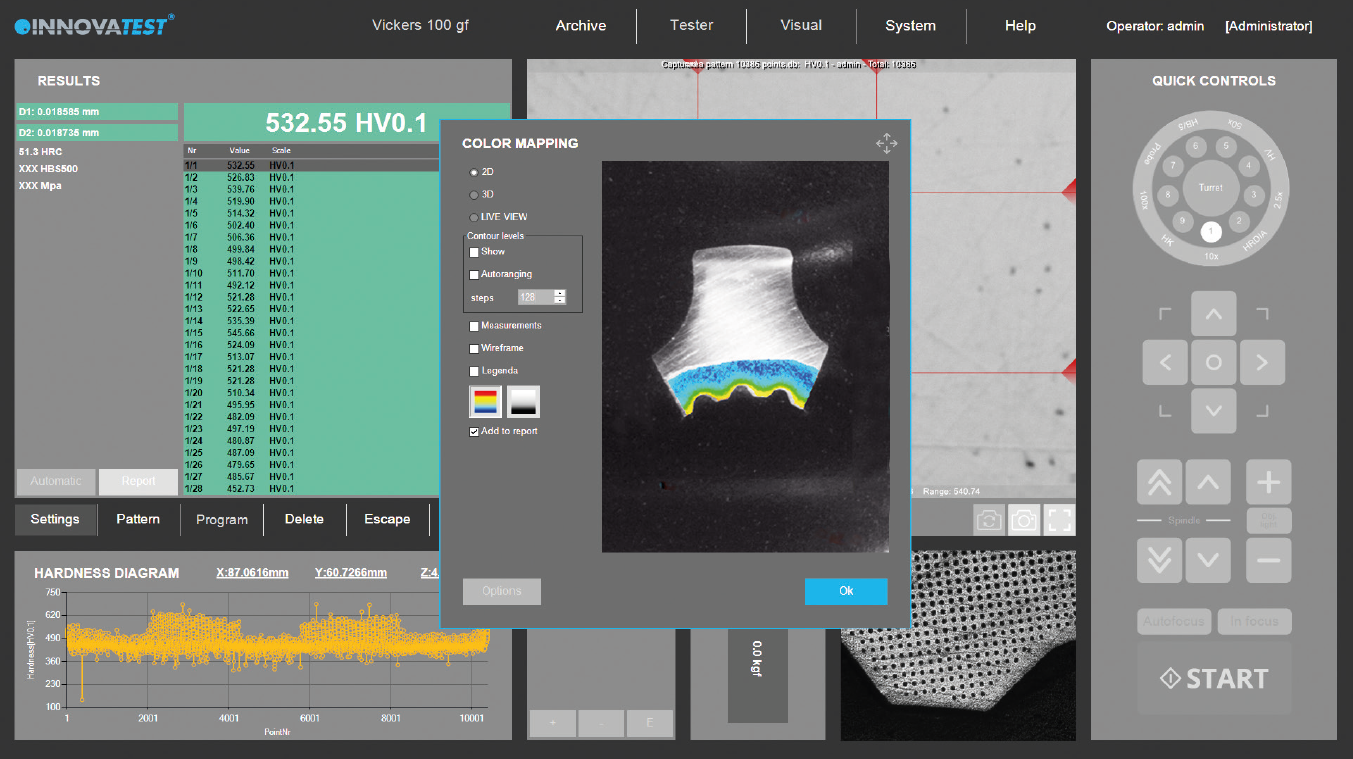
The IMPRESSIONS™ Hardness Mapping module—also known as Plane Hardness Chart or Color Mapping—provides a powerful way to visualize and analyze hardness distribution across a sample.
By converting individual test results into detailed 2D heat maps and 3D hardness charts, the system delivers clear insight into material behavior across the entire cross-section. This makes it an essential tool for Rockwell, Brinell, and Vickers hardness testing applications, particularly in advanced analysis and high-precision environments.
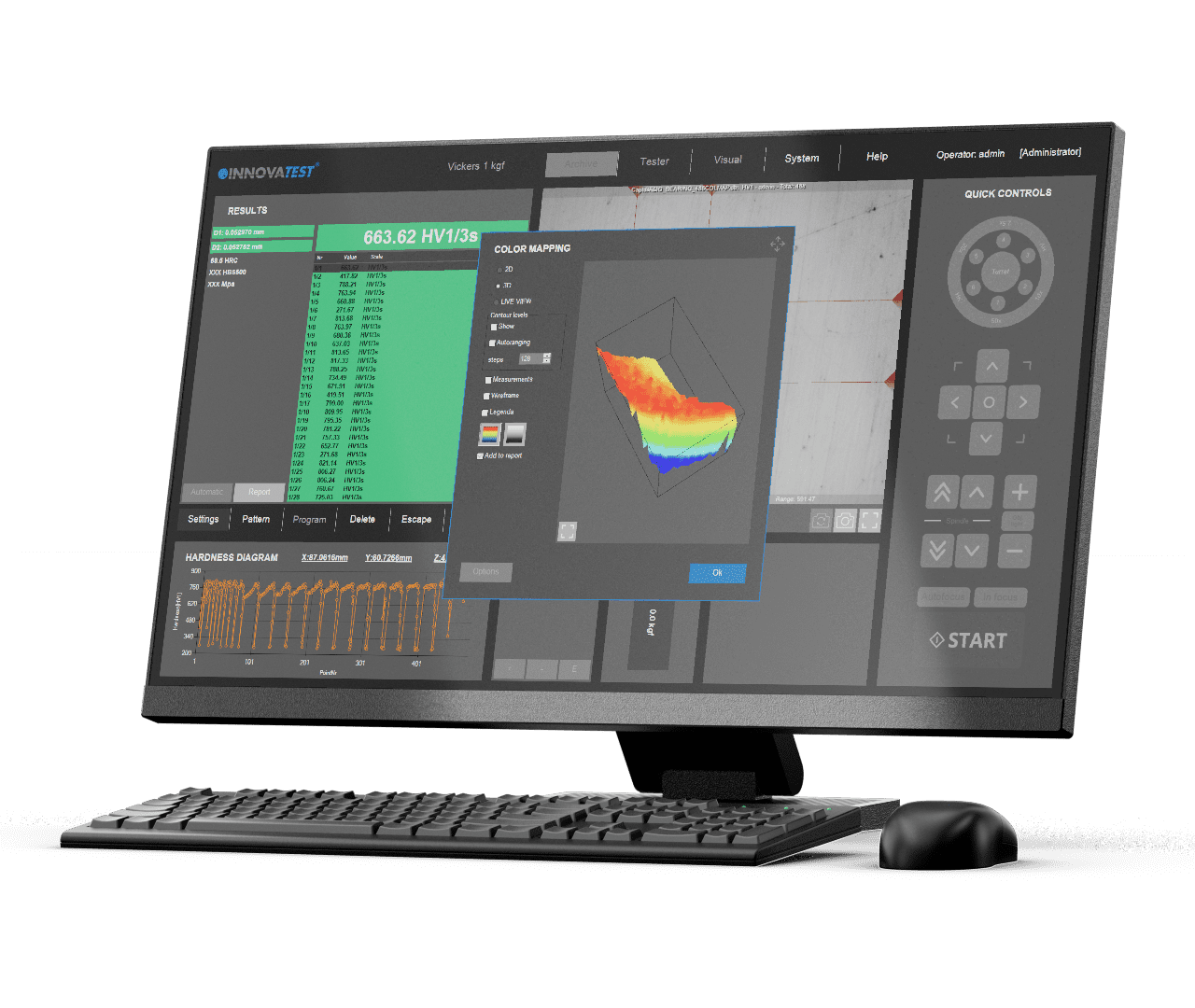
Visualize Hardness Distribution with Heat Maps
Hardness mapping transforms discrete test points into intuitive visual data, allowing users to quickly interpret variations in material properties.
This visual approach enhances both analysis speed and decision-making accuracy.
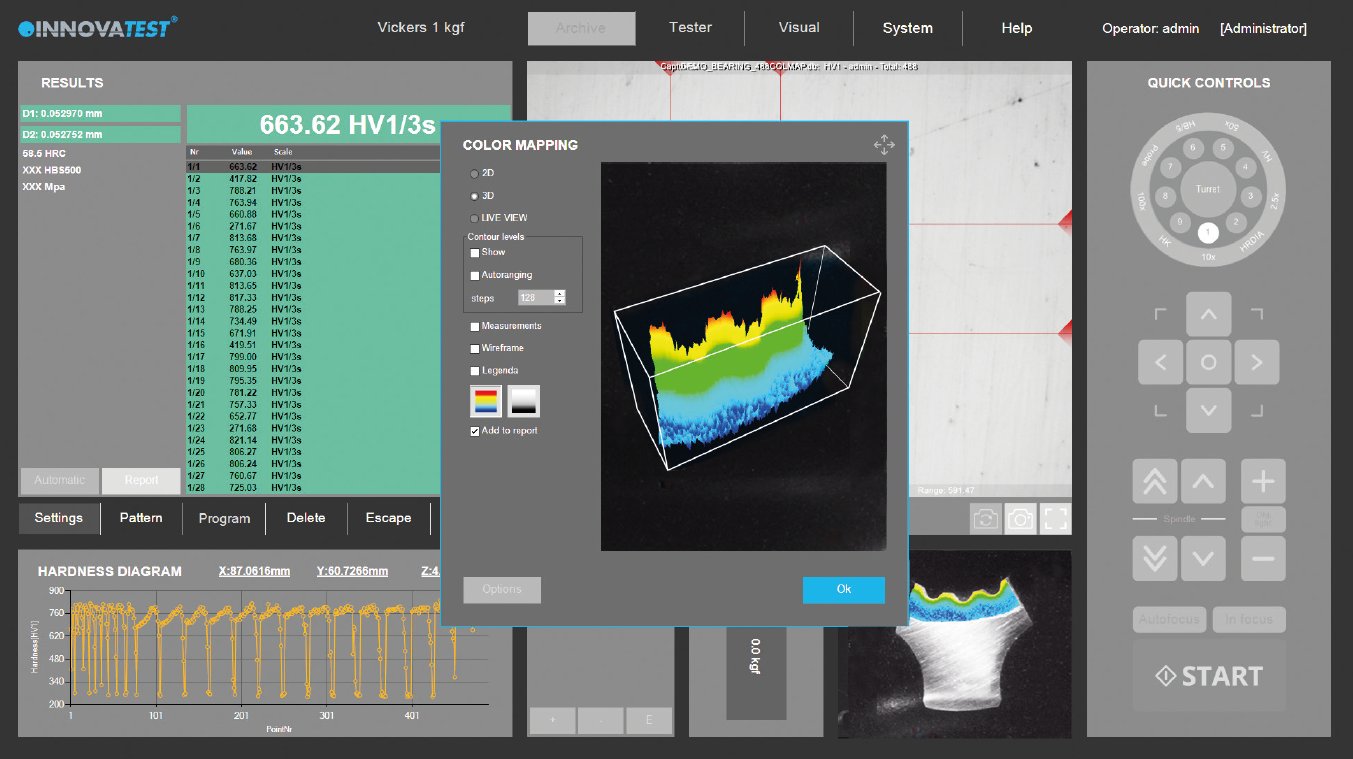
Advanced 3D Hardness Chart Visualization
In addition to 2D mapping, the system can generate detailed 3D hardness charts for enhanced data interpretation.
Both 2D and 3D hardness charts are integrated into a single application, providing flexibility in how results are analyzed and presented.
Automated Hardness Mapping with Contour Integration
When combined with Automatic Sample Contour Scanning, hardness mapping becomes a fully automated process.
This integration supports automated hardness mapping, batch testing, and high throughput testing environments, significantly improving efficiency and repeatability.
Accurate Analysis of Heat-Treated Materials
Hardness mapping is particularly valuable for evaluating the effectiveness of heat treatment processes.
This ensures that heat-treated components meet required specifications and performance standards.
Applications of 2D and 3D Hardness Mapping
Hardness mapping is widely used in both industrial and research environments where detailed material insight is required:
Enhanced Reporting and Data Visualization
All hardness mapping results can be included in comprehensive reports for documentation and analysis.
This ensures that complex data is presented in a clear and professional format.
Optimized for Automated and High Throughput Testing
By combining automated test execution, contour-based positioning, and advanced visualization, the Hardness Mapping module delivers a complete solution for modern hardness testing.
The result is a powerful tool for material characterization, process validation, and advanced hardness analysis, helping organizations gain deeper insight into their materials and production processes.
Drawing & Measuring Software Tools for Integrated Sample Analysis
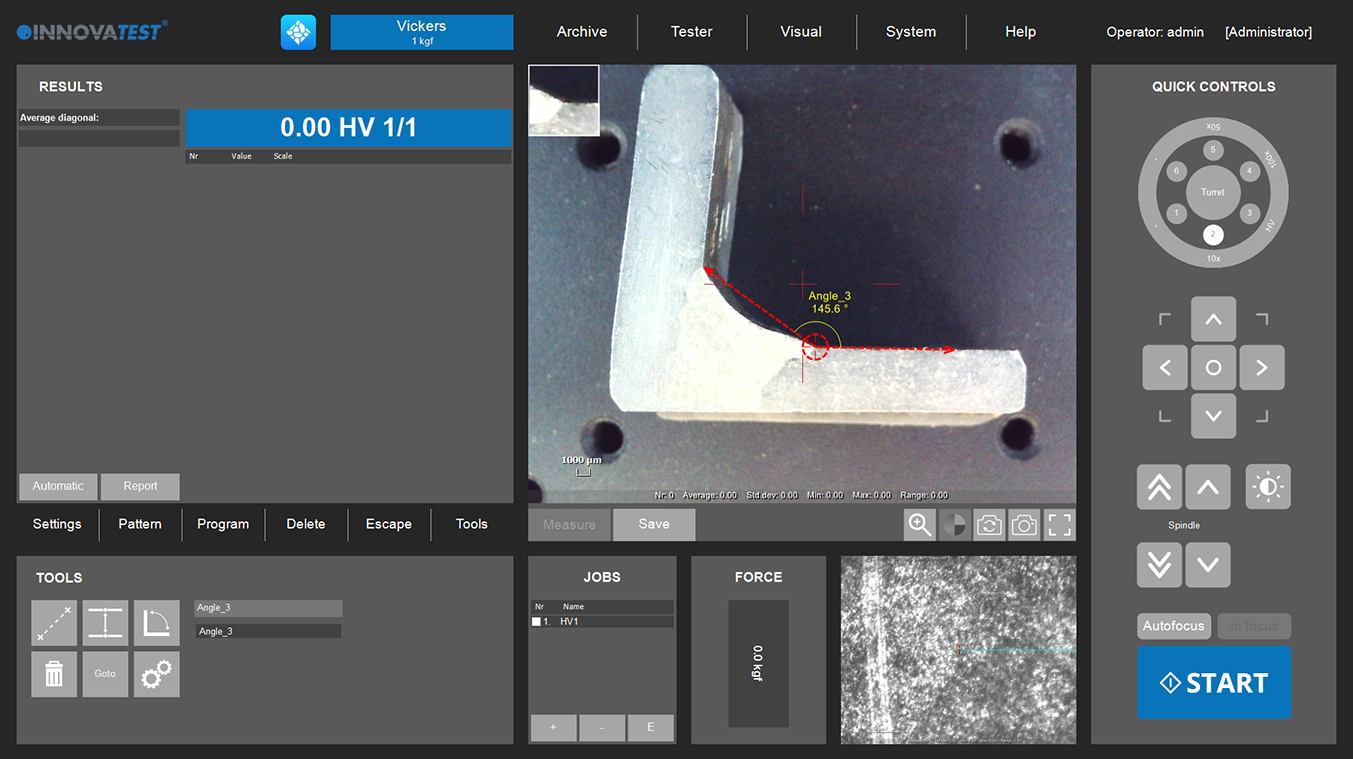
The IMPRESSIONS™ Drawing & Measuring Application extends the functionality of your hardness testing system by enabling precise on-screen dimensional measurements directly within the software.
Designed to complement Rockwell, Brinell, and Vickers hardness testing, this module allows users to perform accurate geometric measurements on live or captured images—eliminating the need for separate measurement microscopes and improving overall workflow efficiency.
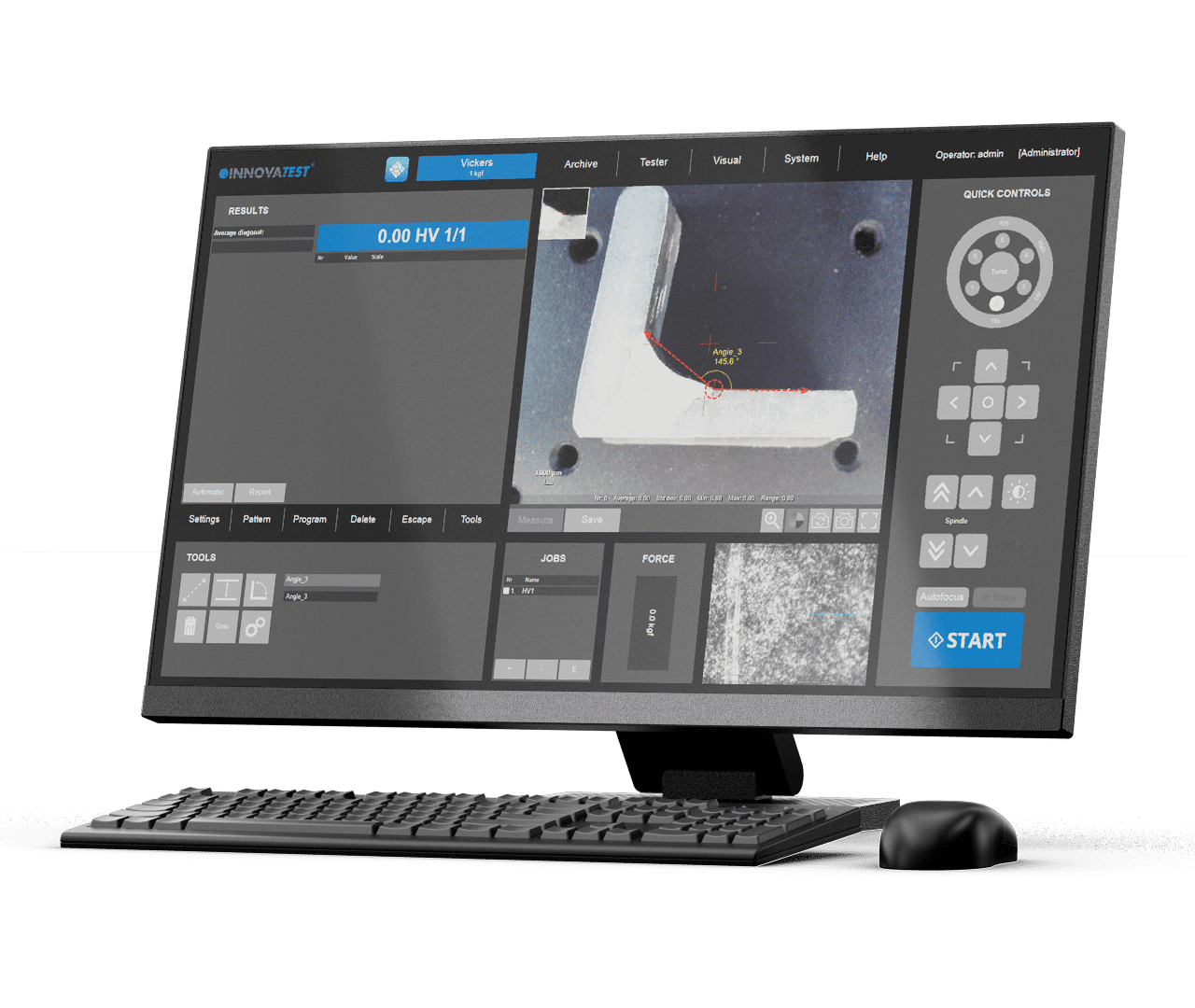
Accurate On-Screen Measurement Tools
The Drawing & Measuring Application provides a range of intuitive tools for performing detailed measurements directly on the sample image.
These tools deliver high accuracy and repeatability, supporting both quick checks and detailed analysis.
Expanded Capabilities Beyond Hardness Testing
By integrating dimensional measurement tools into the hardness testing workflow, the system becomes a multi-functional analysis platform.
This makes the system ideal for environments where both hardness testing and dimensional analysis are required.
Applications in Material Testing and Quality Control
The Drawing & Measuring Application supports a wide range of industrial and laboratory applications:
Integrated Reporting and Documentation
All measurements can be directly incorporated into your test reports, ensuring complete documentation of both hardness and dimensional data.
This creates a comprehensive record of your testing and analysis results in a single report.
Optimized for Efficiency and Accuracy
By combining hardness testing with integrated measurement tools, the Drawing & Measuring Application improves both productivity and analytical capability.
The result is a versatile solution that enhances your hardness testing system with precise, reliable dimensional measurement capabilities.
DualView Screen Technology for Enhanced Hardness Testing Workflows
INNOVATEST DualView Technology expands the usability and efficiency of your hardness testing system by providing a larger, more effective workspace for analysis, automation, and operator control.
While every INNOVATEST hardness tester includes a high-quality 27” industrial landscape touchscreen, the optional DualView configuration upgrades the system to two 24” industrial-grade landscape monitors, creating a powerful dual-screen environment for Rockwell, Brinell, and Vickers hardness testing applications.
This improved visual workspace within our IMPRESSIONS 4 software enhances productivity, simplifies operation, and supports more advanced testing workflows.
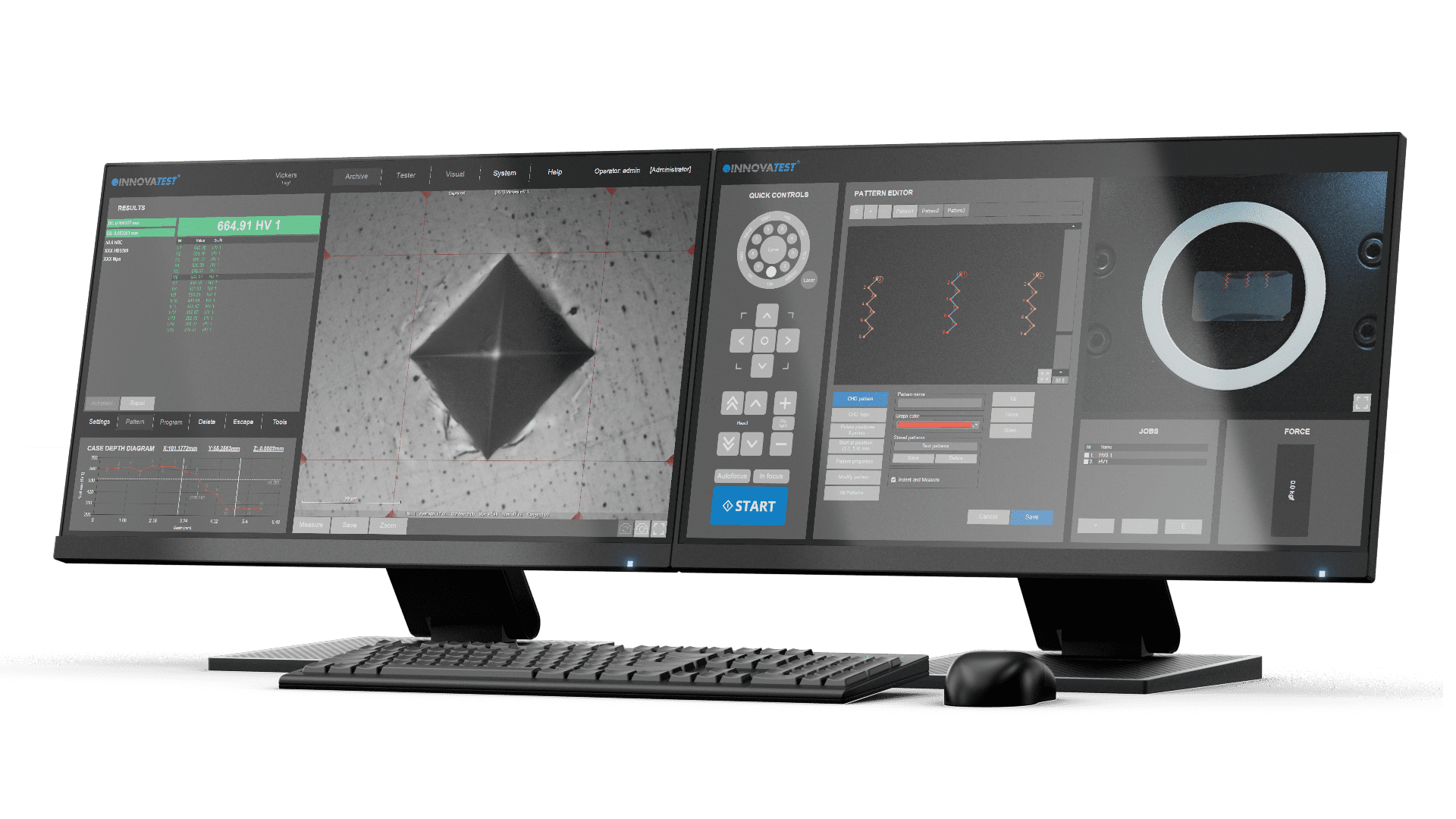
Larger Viewing Area for Better Sample Analysis
Hardness testing often requires close attention to sample details, indentation positioning, and test pattern verification. DualView Technology significantly improves visibility by expanding the display area across two screens.
This increased field of view supports more accurate testing and a more comfortable operator experience.
Keep Test Patterns Visible at All Times
For users performing automated multi-point hardness testing, constant visibility of the test pattern layout is a major advantage.
With DualView Technology:
This is especially valuable for applications involving batch hardness testing, high throughput testing, and automated pattern programs.
Improved User Experience and Easier Software Navigation
More screen space makes the IMPRESSIONS™ software interface easier to navigate and significantly more user-friendly.
This creates a smoother user experience for both experienced operators and new users learning the system.
DualView vs Single-Screen Hardness Testing Operation
Traditional single-screen operation can limit visibility and slow down complex testing workflows, particularly when working with large samples, automated test patterns, or advanced analysis functions.
DualView Technology provides a clear operational advantage:
Single-Screen Operation Limitations
DualView Technology Advantages
By reducing screen switching and improving visibility, DualView Technology increases both productivity and testing accuracy.
Ideal for Teaching, Research, and Collaborative Environments
DualView Technology is particularly valuable in laboratories where multiple users need to observe the testing process.
This makes the system highly effective for both industrial production and academic applications.
Optimized for Automated and High Throughput Testing
In environments where speed, precision, and repeatability are critical, DualView Technology improves operational efficiency and testing performance.
The result is a more efficient, accurate, and operator-friendly hardness testing process—designed for modern laboratories and demanding production environments.
A Smarter Workspace for Modern Hardness Testing
By combining industrial-grade displays with intelligent software integration, DualView Technology transforms the way operators interact with hardness testing systems.
The result is greater visibility, better workflow control, and improved confidence in every test—making it an ideal upgrade for laboratories focused on productivity, automation, and precision.
Report Generator and Data Output Integration for Complete Hardness Testing Control
The IMPRESSIONS™ Report Generator and Report Configurator provide complete flexibility in how your Rockwell, Brinell, and Vickers hardness testing results are documented, shared, and integrated into your quality systems.
From simple CSV exports to fully customized professional PDF reports, the system is designed to match your exact reporting requirements—whether for internal quality control, customer documentation, audits, or full ERP and QMS integration.
This is data management for modern hardness testing, built around automation, traceability, and customer-specific workflows.
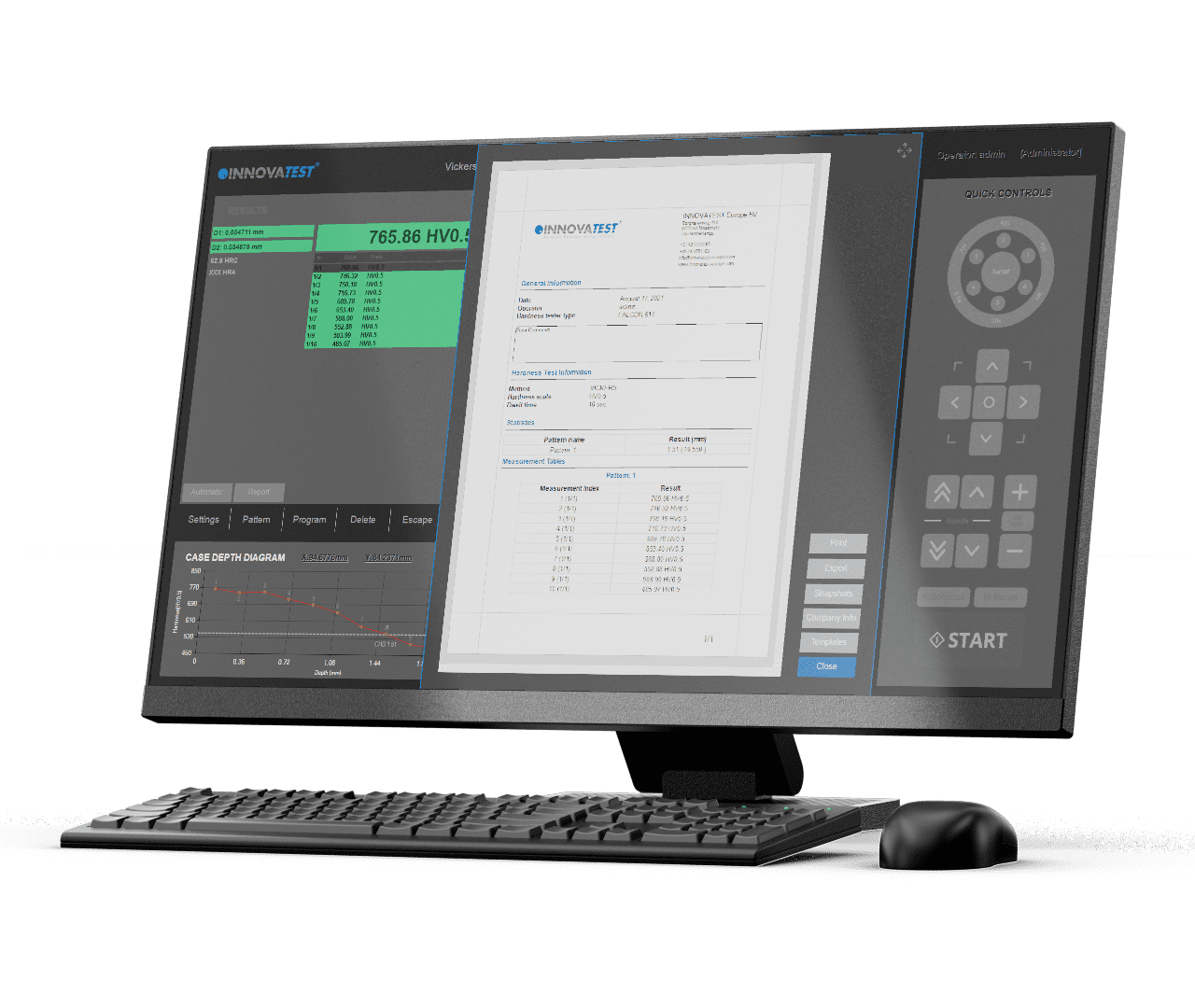
Fully Customizable Hardness Testing Reports
Every customer has different reporting requirements. Our Report Configurator allows you to decide exactly what should be included in your final test reports.
Possible report contents include:
You choose how much—or how little—information is included.
This ensures that every report is relevant, professional, and aligned with your internal or customer requirements.
Professional PDF Reports and Flexible Export Options
Results can be exported in multiple formats to support both simple documentation and advanced digital workflows.
This flexibility supports everything from basic reporting to enterprise-level quality management systems.
Seamless Integration with Quality Control Systems
For advanced manufacturing environments, IMPRESSIONS™ integrates directly with external quality control and production systems.
This makes the software ideal for high throughput testing, batch hardness testing, and automated production environments where traceability and compliance are essential.
Bespoke Data Output Solutions for Specialized Requirements
Not every customer works with standard formats—and that is where our engineering team adds real value.
If your reporting or integration requirements are unique, we provide tailored solutions including:
At INNOVATEST™, bespoke solutions are not exceptions—they are standard.
Better Traceability, Stronger Quality Assurance
Accurate reporting is critical for maintaining quality standards and supporting audits, certifications, and customer approvals.
Our reporting system helps you:
This creates a more reliable and efficient hardness testing process from test execution to final documentation.
Report Configurator vs Standard Reporting Systems
Many conventional hardness testers offer limited reporting functionality with fixed templates and restricted export options.
IMPRESSIONS™ delivers a far more flexible solution:
Standard Reporting Limitations
IMPRESSIONS™ Report Configurator Advantages
This transforms reporting from a simple output function into a powerful productivity and quality control tool.
Data Management Built for Modern Hardness Testing
From basic PDF reports to fully integrated smart factory environments, the IMPRESSIONS™ Report Generator ensures your test data works for your business—not against it.
The result is faster reporting, stronger quality control, better customer documentation, and a fully connected hardness testing workflow designed for the future of manufacturing.
Snapshot Function for Visual Documentation in Hardness Testing
The IMPRESSIONS™ Snapshot Function provides a fast and efficient way to capture high-quality images directly from your hardness testing system during Rockwell, Brinell, and Vickers hardness testing applications.
Using either the microscope objective view or the overview camera, operators can instantly create screen captures of test areas, indentations, microstructures, and sample conditions for documentation, reporting, and future analysis.
This simple but powerful tool improves traceability, supports quality control, and enhances professional test reporting.
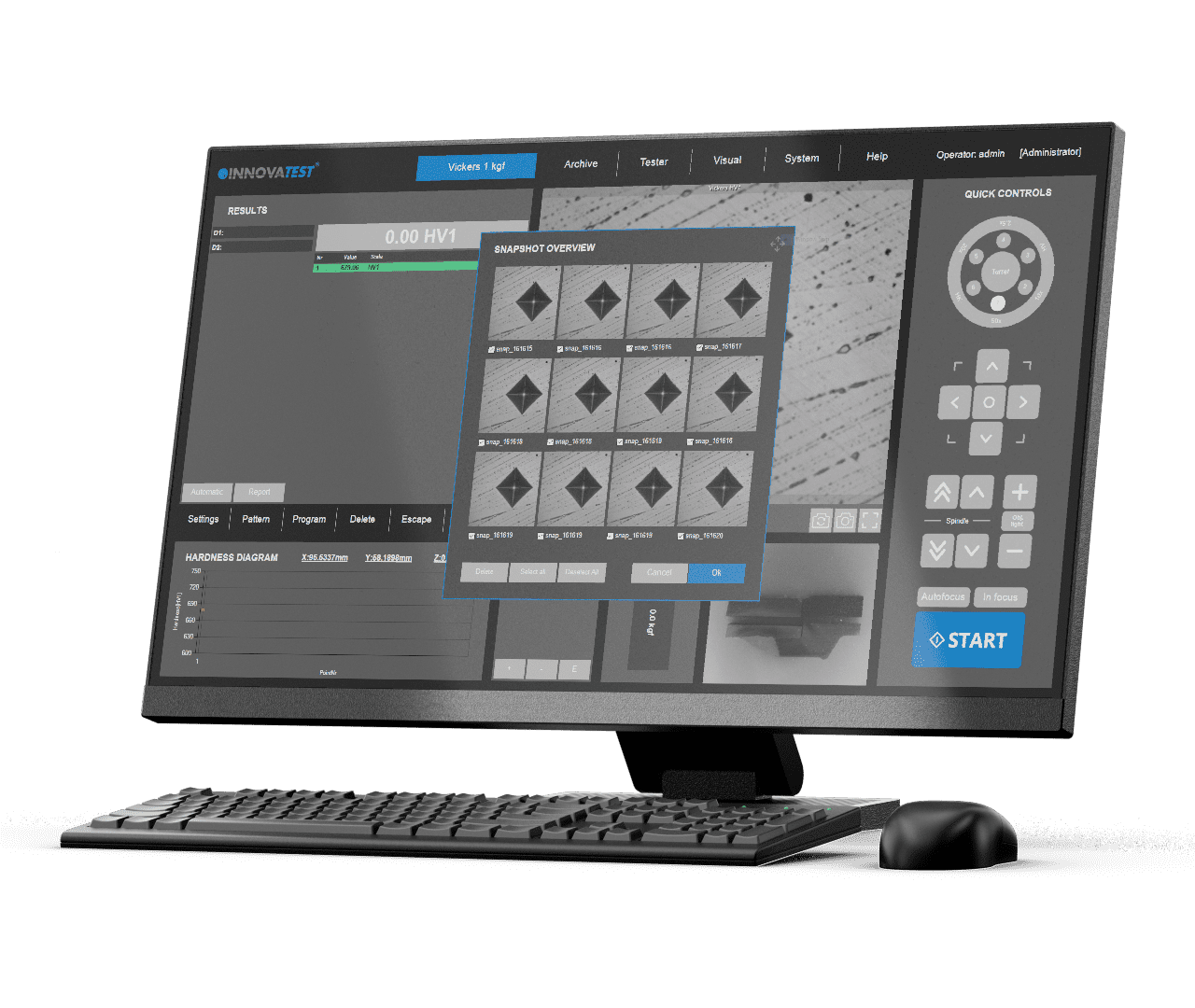
Instant Image Capture from Objective View and Overview Camera
The Snapshot Function allows users to capture exactly what they see during testing, without interrupting workflow.
This ensures that important visual information is preserved as part of the testing process.
Add Comments and Notes for Better Traceability
Each snapshot can be saved together with operator notes, comments, or customer-specific observations.
This makes every captured image more meaningful and useful during later analysis.
Direct Integration with the Report Generator
Snapshots can be seamlessly inserted into the IMPRESSIONS™ Report Generator for complete and professional test documentation.
This ensures that reports are not only data-driven, but also visually supported and easier to interpret.
Applications of Snapshot Function in Hardness Testing
The Snapshot Function is valuable across a wide range of hardness testing and material analysis applications:
This improves both technical analysis and communication with customers and auditors.
Flexible Image Storage and Export Options
Captured snapshots can be stored locally, exported, or integrated into broader data management workflows.
This ensures that valuable visual data remains easily accessible whenever needed.
Snapshot Function vs Manual Image Documentation
Traditional image documentation often requires separate cameras, manual file transfers, or external software processing.
The IMPRESSIONS™ Snapshot Function offers a faster and more reliable alternative:
Traditional Image Documentation Limitations
IMPRESSIONS™ Snapshot Function Advantages
This saves time while improving documentation quality and workflow efficiency.
Better Reporting Through Visual Evidence
In modern hardness testing, data alone is often not enough. Visual documentation strengthens reporting, improves communication, and supports better decision-making.
The IMPRESSIONS™ Snapshot Function ensures that every important image can be captured, stored, and reported—creating a complete, professional, and audit-ready testing record.
Automatic Edge Detection for Faster and More Accurate Hardness Testing
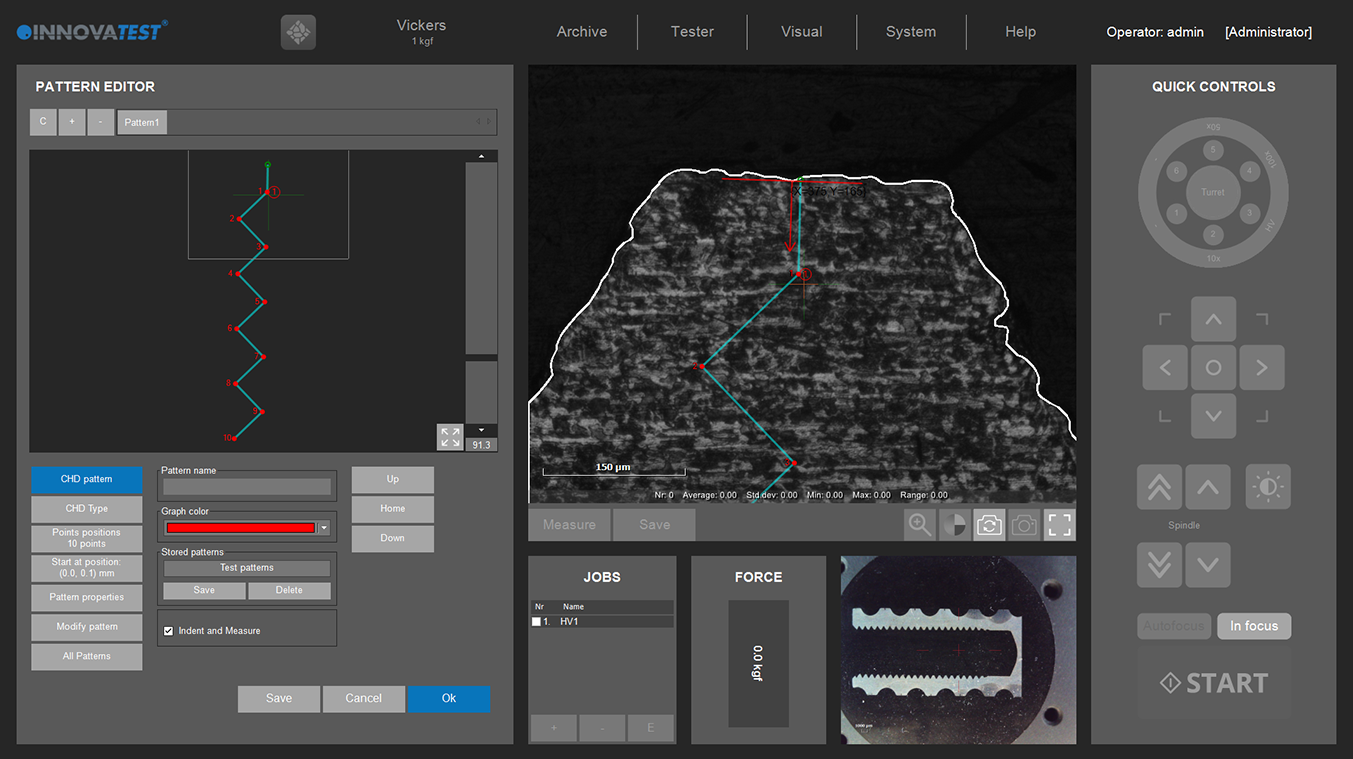
The IMPRESSIONS™ Automatic Edge Detection module simplifies and accelerates pattern testing, case hardening depth (CHD) analysis, and multi-point hardness testing by automatically identifying the exact edge of your sample.
Using advanced contrast recognition technology, the software detects sample boundaries instantly—either fully automatically or with a single mouse click—allowing operators to define precise starting positions for Rockwell, Brinell, and Vickers hardness testing applications.
This improves setup speed, reduces operator dependency, and ensures highly repeatable results.
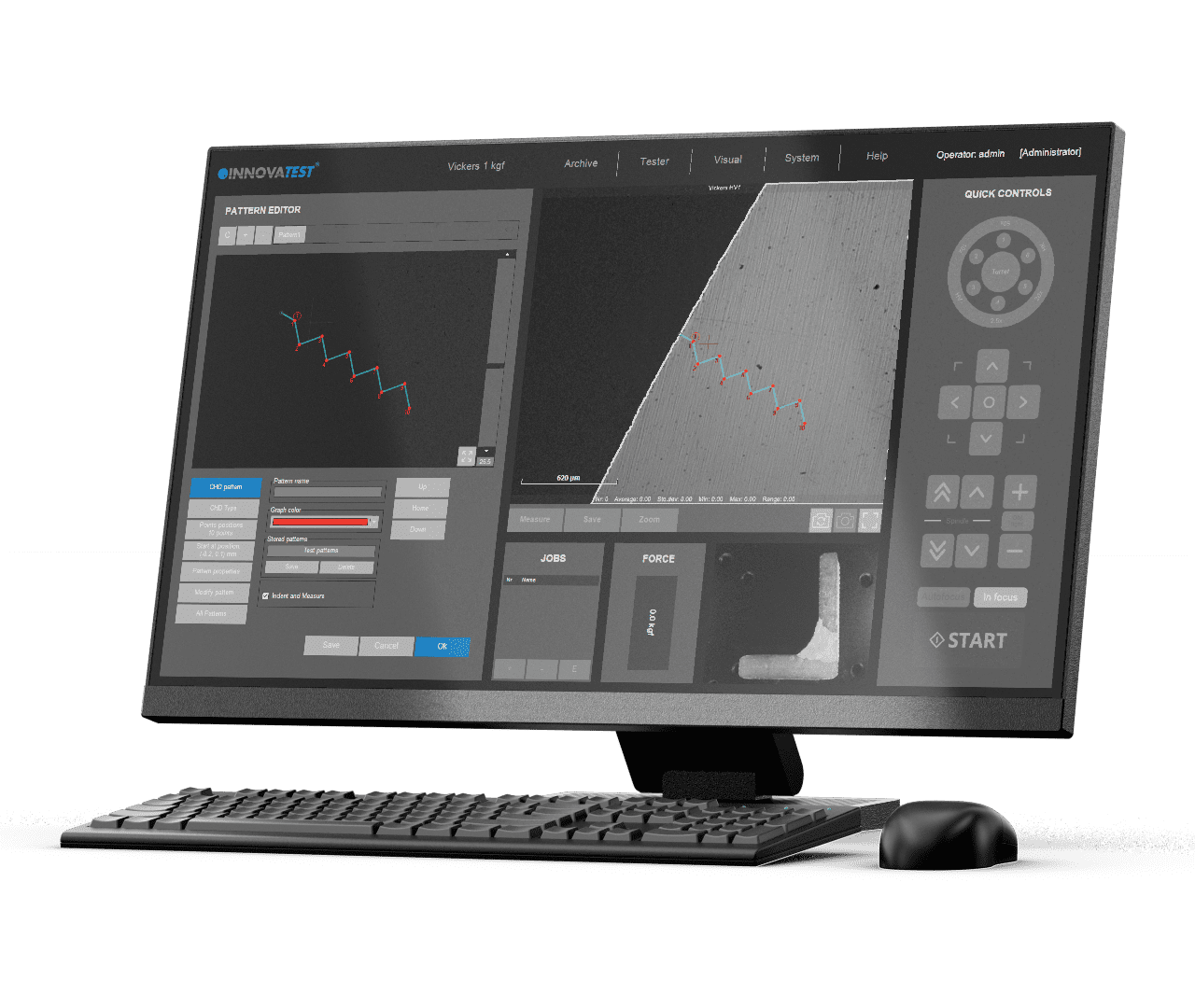
Intelligent Edge Recognition for Precise Test Positioning
Accurate edge detection is critical when hardness measurements must be taken at specific distances from a surface, weld line, or treatment boundary.
The system automatically analyzes contrast differences between the sample and background to determine the exact sample edge.
This ensures consistent and reliable test point placement across every sample.
Optimized for CHD and Case Depth Analysis
Automatic Edge Detection is especially valuable for Case Hardening Depth (CHD) testing, where accurate positioning relative to the surface is essential.
This creates a faster and more reliable workflow for heat treatment verification and surface hardness analysis.
Seamless Integration with Pattern Testing
The module works directly with the IMPRESSIONS™ Test Pattern Editor, making automated multi-point testing even more efficient.
This is ideal for laboratories and production environments where speed and repeatability are critical.
Applications of Automatic Edge Detection
Automatic Edge Detection supports a wide range of hardness testing applications where precise positioning is required:
This makes the module a key tool for both routine quality control and advanced material analysis.
Automatic vs Manual Edge Positioning
Traditional manual edge positioning requires operators to visually estimate sample boundaries and manually place test points, which can be slow and inconsistent.
Automatic Edge Detection offers a major advantage:
Manual Edge Positioning Limitations
IMPRESSIONS™ Automatic Edge Detection Advantages
By eliminating manual positioning, the system improves both testing speed and measurement reliability.
Improved Workflow for Modern Hardness Testing
Automatic Edge Detection reduces setup time, improves precision, and supports more advanced automated testing workflows.
Combined with pattern testing, contour scanning, and hardness mapping, it creates a highly efficient and intelligent hardness testing environment—designed for modern laboratories, production facilities, and research applications.
The result is faster testing, stronger repeatability, and greater confidence in every hardness measurement.
Real-Time Force vs Depth vs Time Diagrams for Advanced Hardness Testing
The IMPRESSIONS™ real-time Force vs Depth vs Time Diagram module provides a powerful visual representation of the hardness testing process during Rockwell hardness testing and other depth-based hardness measurements.
By displaying the exact relationship between applied force, indenter penetration depth, and test duration, this feature gives operators deeper insight into the testing process—far beyond what is possible with traditional analogue or purely numerical hardness testers.
This enables improved test validation, faster troubleshooting, and greater confidence in every measurement.
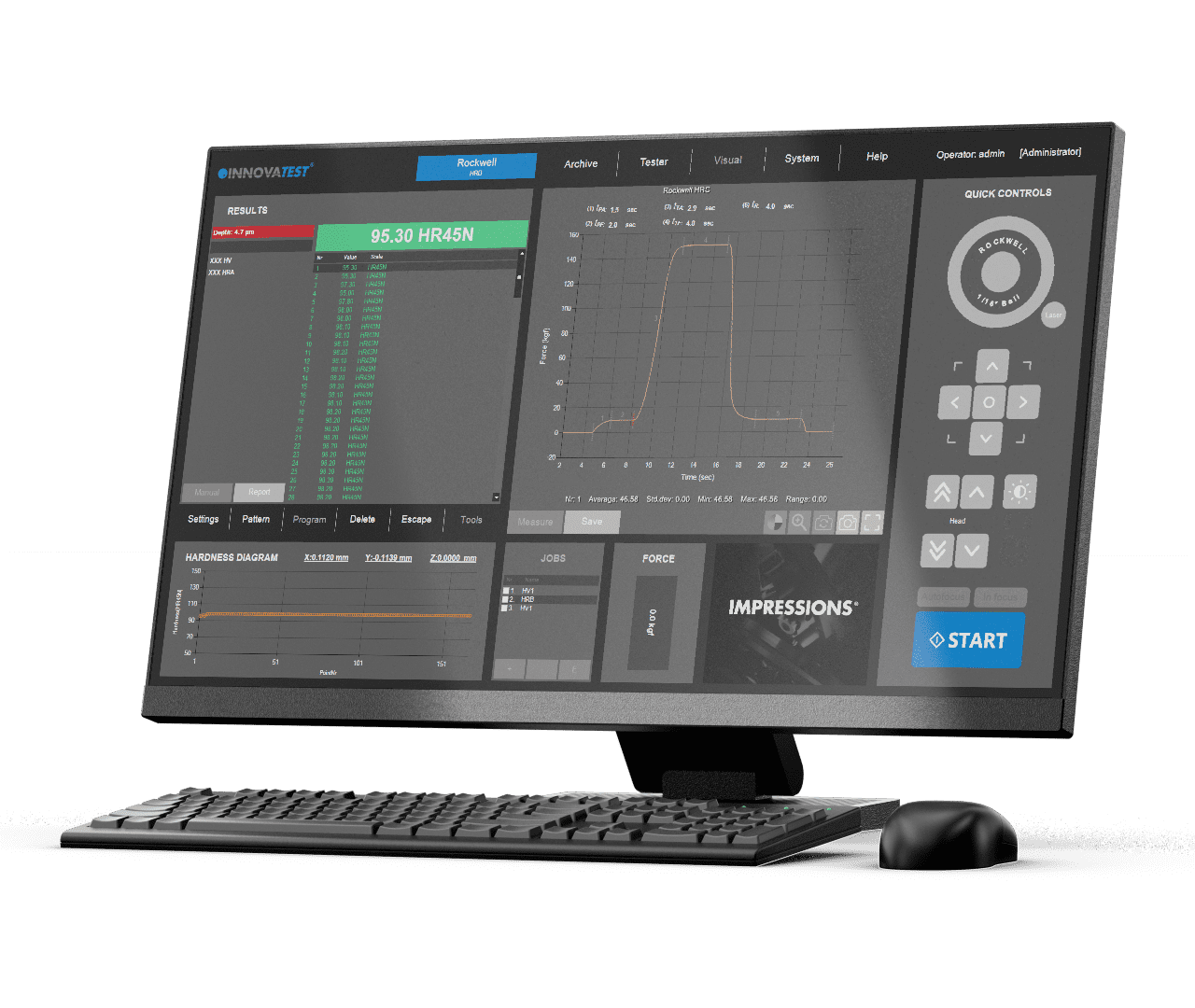
Live Visualization of Indenter Depth During Rockwell Testing
During a Rockwell hardness test, the system continuously monitors and displays the movement of the indenter as force is applied to the sample.
This allows operators to clearly see how the material responds during testing, rather than relying only on the final hardness value.
Force vs Depth Diagram for Process Verification
The force/depth diagram provides a clear graphical view of the relationship between applied force and indentation depth.
This visual analysis helps operators verify:
This makes it easier to identify potential issues before they affect final results.
Detect Errors Before They Impact Results
Traditional hardness testers often provide only the final hardness value, making it difficult to identify testing errors or irregularities.
With real-time depth monitoring, users can quickly detect:
This improves reliability and reduces the risk of inaccurate measurements.
Integrated Reporting with Graphical Test Evidence
The Force vs Depth vs Time graph can be directly included in the IMPRESSIONS™ Report Generator, providing valuable visual proof of the testing process.
This transforms reporting from simple numerical output into a more complete and professional technical document.
Real-Time Digital Analysis vs Traditional Analogue Hardness Testing
Conventional Rockwell hardness testers often rely on analogue dial readings or basic digital outputs that provide limited insight into the test process.
The IMPRESSIONS™ real-time diagram offers a significant advantage:
Traditional Hardness Testing Limitations
IMPRESSIONS™ Real-Time Diagram Advantages
This creates a more transparent and reliable hardness testing process.
Applications of Force vs Depth Monitoring
This functionality is especially valuable in applications where process validation and depth accuracy are critical:
Better Insight, Better Hardness Testing
By combining real-time visualization, advanced diagnostics, and integrated reporting, the Force vs Depth vs Time Diagram module brings a new level of control to hardness testing.
The result is improved accuracy, stronger quality assurance, and a deeper understanding of material behavior—making it an essential tool for modern Rockwell and depth-based hardness testing environments.
Screw Thread Hardness Testing According to ISO 898-1
The IMPRESSIONS™ Screw Thread Hardness Testing Module is a specialized software tool designed for fully automated hardness testing of threaded fasteners in accordance with ISO 898-1.
This application is specifically developed for evaluating the hardness of screw threads and detecting decarburization and carburization in threaded parts—critical factors in the performance, strength, and reliability of bolts, screws, and fasteners used in demanding industrial applications.
By combining automated setup, precise positioning, standards-based calculations, and enhanced reporting, the system delivers fast, repeatable, and compliant results.
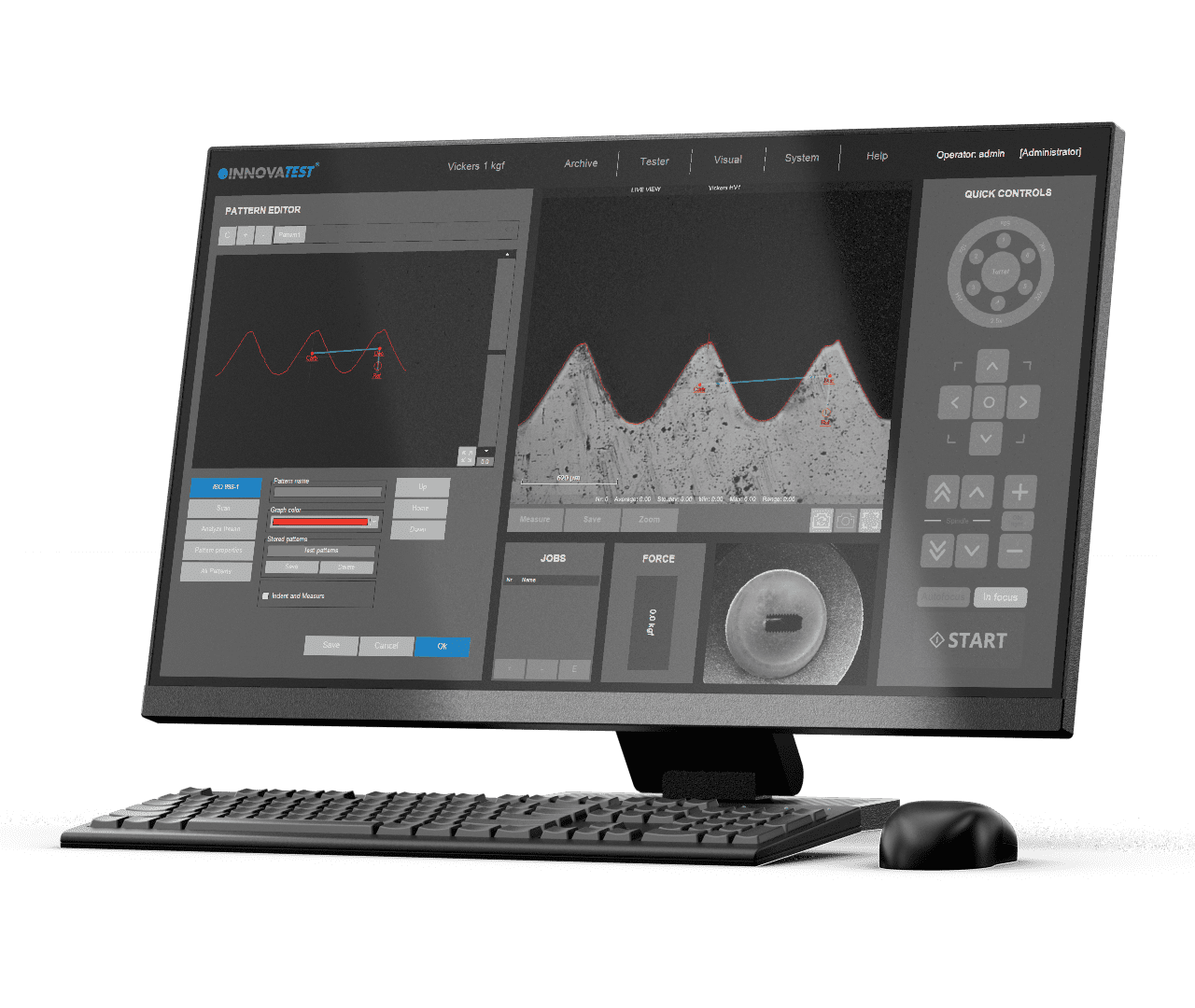
Automated Testing for Decarburization and Carburization Analysis
ISO 898-1 defines strict requirements for evaluating the hardness profile of threaded fasteners, particularly in relation to decarburized or carburized surface layers.
The IMPRESSIONS™ module simplifies this process by enabling:
This ensures reliable measurement of hardness changes that directly affect fastener performance.
Standards-Compliant Testing According to ISO 898-1
The software is fully configured to perform testing according to the requirements of ISO 898-1, the international standard covering mechanical properties of fasteners made from carbon steel and alloy steel.
This includes evaluation of:
The module uses predefined templates and test procedures aligned with the standard, reducing setup time and eliminating operator uncertainty.
Hardness Profile Measurement and Embedded Calculations
The software automatically manages the test sequence and applies the relevant calculations required for screw thread hardness evaluation.
A typical hardness profile is measured from the thread surface toward the core:
Where:
This calculation helps determine whether the fastener meets ISO 898-1 acceptance criteria for mechanical integrity and service performance.
The software ensures:
Enhanced Reporting for ISO 898-1 Compliance
The IMPRESSIONS™ Report Generator includes dedicated reporting templates specifically for screw thread hardness testing.
Reports can include:
This creates a professional, audit-ready report fully aligned with customer and standard requirements.
Applications of Screw Thread Hardness Testing
This module is essential for manufacturers and laboratories involved in fastener production and verification.
Typical industries include:
In these industries, reliable decarburization testing is essential for ensuring safety, durability, and compliance.
Automated vs Manual Screw Thread Hardness Testing
Traditional manual thread hardness testing can be slow, difficult to position accurately, and highly dependent on operator skill.
IMPRESSIONS™ provides a far more efficient solution:
Manual Testing Limitations
IMPRESSIONS™ ISO 898-1 Module Advantages
This transforms a complex specialized test into a fast, repeatable, and highly reliable process.
Precision Fastener Testing for Modern Quality Control
By combining automated testing, embedded ISO standards, and advanced reporting, the IMPRESSIONS™ Screw Thread Hardness Module provides a complete solution for fastener quality assurance.
The result is faster testing, stronger compliance, and greater confidence in the mechanical integrity of every threaded component—making it an essential tool for modern fastener manufacturing and inspection.
Tapping Screw Hardness Testing According to ISO 2702
The IMPRESSIONS™ Tapping Screw Hardness Testing Module is a specialized software solution designed for fully automated hardness testing of tapping screws in accordance with ISO 2702.
This application is specifically developed for evaluating the hardness profile of self-tapping screws, including the detection of decarburization and carburization in the thread area—critical factors that directly affect thread-forming performance, wear resistance, and mechanical reliability.
By combining automated positioning, standards-based calculations, and enhanced reporting, the system delivers fast, repeatable, and fully compliant results for fastener manufacturers and quality control laboratories.
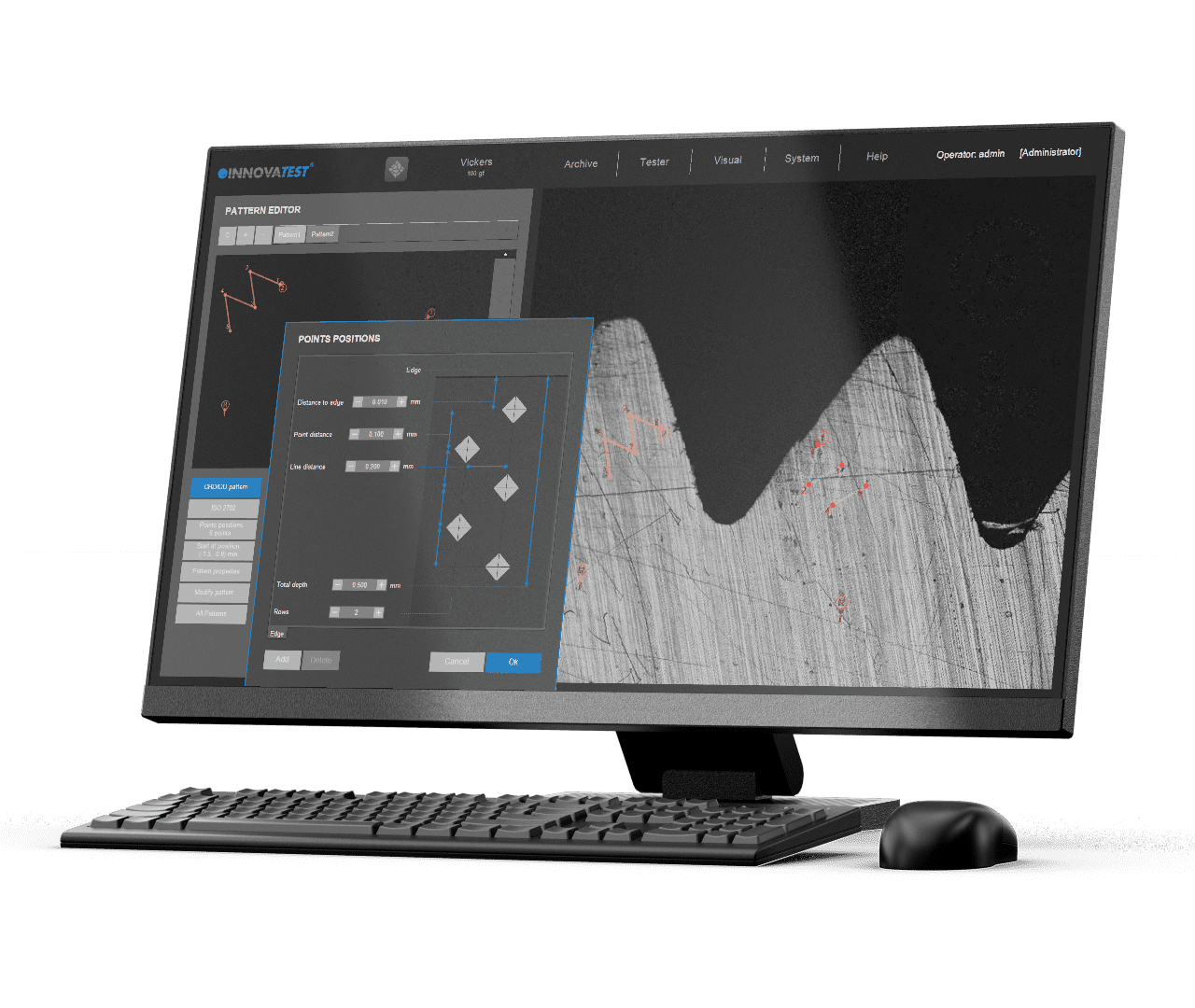
Automated Testing for Decarburization and Surface Hardness Analysis
ISO 2702 defines strict hardness requirements for tapping screws, particularly for ensuring the correct balance between surface hardness and core hardness.
The IMPRESSIONS™ module simplifies this process by enabling:
This ensures that tapping screws meet the hardness requirements necessary for reliable thread-forming performance without premature failure.
Standards-Compliant Testing According to ISO 2702
The software is fully configured to perform hardness testing according to the requirements of ISO 2702, the international standard for heat-treated steel tapping screws.
This includes evaluation of:
Using predefined templates and test procedures aligned with ISO 2702, the module reduces setup time and ensures full compliance with the standard.
Embedded Hardness Profile Calculations
The software automatically controls the test sequence and performs the required calculations for hardness profile evaluation.
A typical hardness traverse compares surface hardness and core hardness:

Where:
This allows clear verification of whether the tapping screw meets ISO 2702 acceptance criteria for performance and durability.
The software ensures:
Enhanced Reporting for ISO 2702 Compliance
The IMPRESSIONS™ Report Generator includes dedicated reporting templates specifically for tapping screw hardness testing.
Reports can include:
This creates professional, audit-ready documentation aligned with customer requirements and international standards.
Applications of Tapping Screw Hardness Testing
This module is essential for manufacturers and laboratories involved in the production and inspection of self-tapping screws and threaded fastening systems.
Typical industries include:
In these industries, reliable hardness testing ensures both performance and long-term durability.
Automated vs Manual Tapping Screw Hardness Testing
Traditional manual tapping screw hardness testing can be difficult, slow, and highly dependent on operator skill due to the complex thread geometry.
IMPRESSIONS™ provides a far more efficient solution:
Manual Testing Limitations
IMPRESSIONS™ ISO 2702 Module Advantages
This transforms a highly specialized quality control process into a fast, repeatable, and highly reliable workflow.
Precision Hardness Testing for Fastener Quality Assurance
By combining automated testing, embedded ISO standards, and advanced reporting tools, the IMPRESSIONS™ Tapping Screw Hardness Module provides a complete solution for tapping screw quality control.
The result is improved compliance, faster inspections, and greater confidence in the performance of every threaded fastener—making it an essential tool for modern fastener manufacturing and verification.
User Level Management and Stored Testing Methods for Secure and Repeatable Hardness Testing
The IMPRESSIONS™ User Level Management module ensures consistent, secure, and repeatable hardness testing by protecting critical test parameters and controlling operator access within the software.
For routine and repetitive testing applications, users can create and store fully customized test programs (“jobs”) containing all application-specific settings. Combined with user access control, this prevents accidental changes to validated methods and helps maintain the highest levels of data integrity, repeatability, and reproducibility.
This is especially important for laboratories performing Rockwell, Brinell, and Vickers hardness testing in regulated quality control environments.
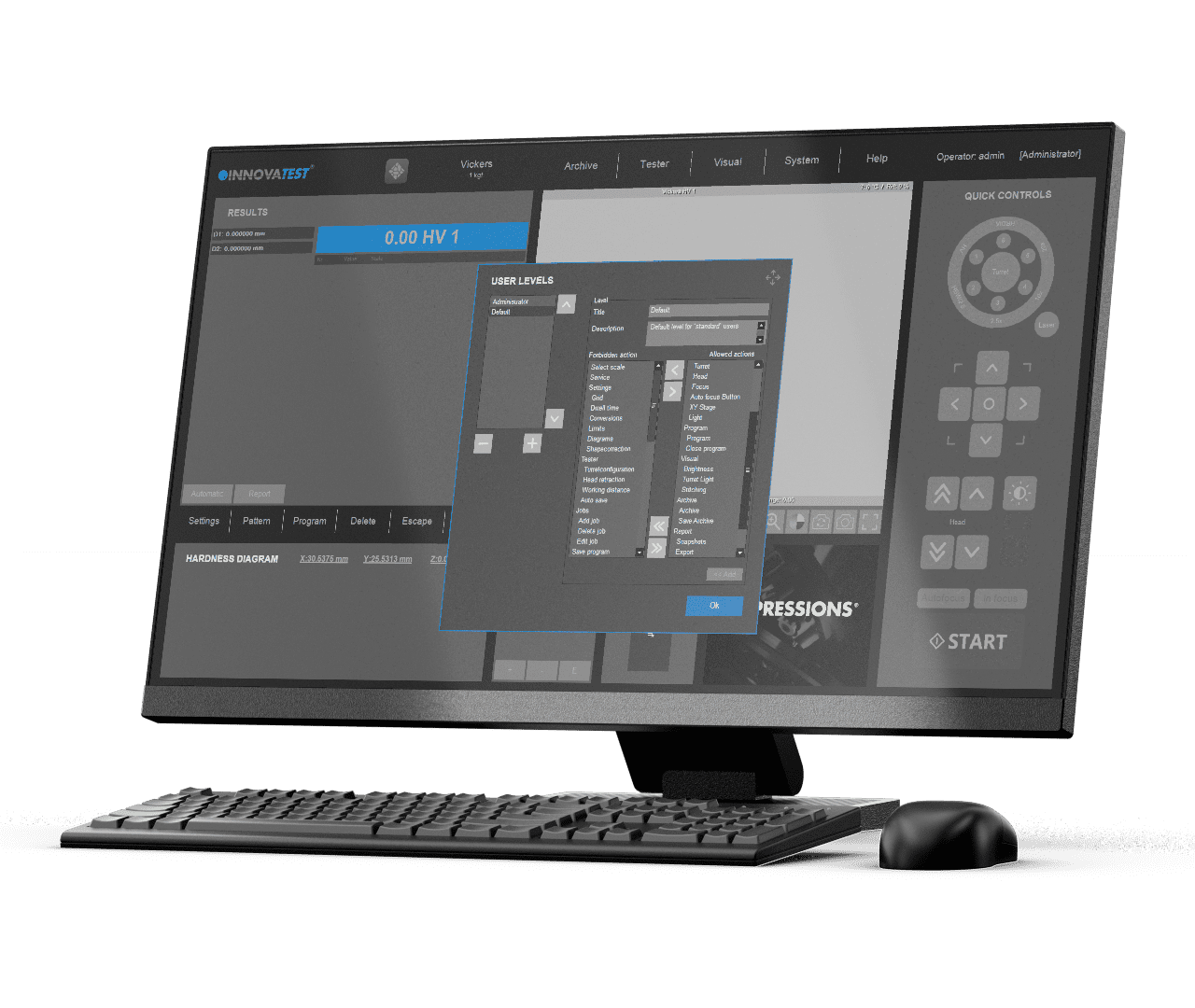
Store Complete Test Programs for Repeating Jobs
Many hardness testing applications require the same method to be repeated consistently across batches, operators, and production shifts.
IMPRESSIONS™ allows users to create dedicated test programs for each application, storing all critical testing parameters in a single controlled job.
Each stored job can include:
This ensures that every test is performed exactly as intended—every time.
Protect Validated Methods from Unwanted Changes
Accidental changes to testing parameters can lead to incorrect results, failed audits, and costly quality issues.
User Level Management protects your validated methods by restricting access to sensitive settings.
This significantly improves testing reliability and reduces the risk of operator error.
Role-Based Access for Quality Control Laboratories
Different users require different levels of access depending on their responsibilities. IMPRESSIONS™ supports structured user permissions to match your quality system requirements.
Typical access levels include:
Operator Level
Supervisor Level
Administrator Level
This ensures strong control over method integrity while maintaining efficient day-to-day operation.
Data Integrity and Software Method Integrity
In modern quality laboratories, protecting the integrity of testing methods and results is just as important as measurement accuracy itself.
User Level Management supports:
For customers working in automotive, aerospace, medical, fastener manufacturing, and regulated production environments, this level of control is essential for maintaining quality standards.
Improved Repeatability and Reproducibility
By combining stored jobs with protected access levels, the software ensures higher levels of repeatability and reproducibility (R&R) across all hardness testing operations.
This creates a stronger and more reliable quality control process.
User Level Management vs Open Access Testing
Traditional hardness testing systems often allow unrestricted access to testing parameters, increasing the risk of unintended changes and inconsistent results.
IMPRESSIONS™ provides a far more controlled solution:
Standard Open Access Limitations
IMPRESSIONS™ User Level Management Advantages
This transforms routine hardness testing into a controlled, secure, and highly reliable process.
Built for Modern Quality Assurance
By combining automated test programs, protected software methods, and structured user permissions, User Level Management strengthens the foundation of your hardness testing workflow.
The result is better process control, stronger compliance, and greater confidence in every test result—making it an essential feature for professional hardness testing laboratories focused on quality, traceability, and operational excellence.
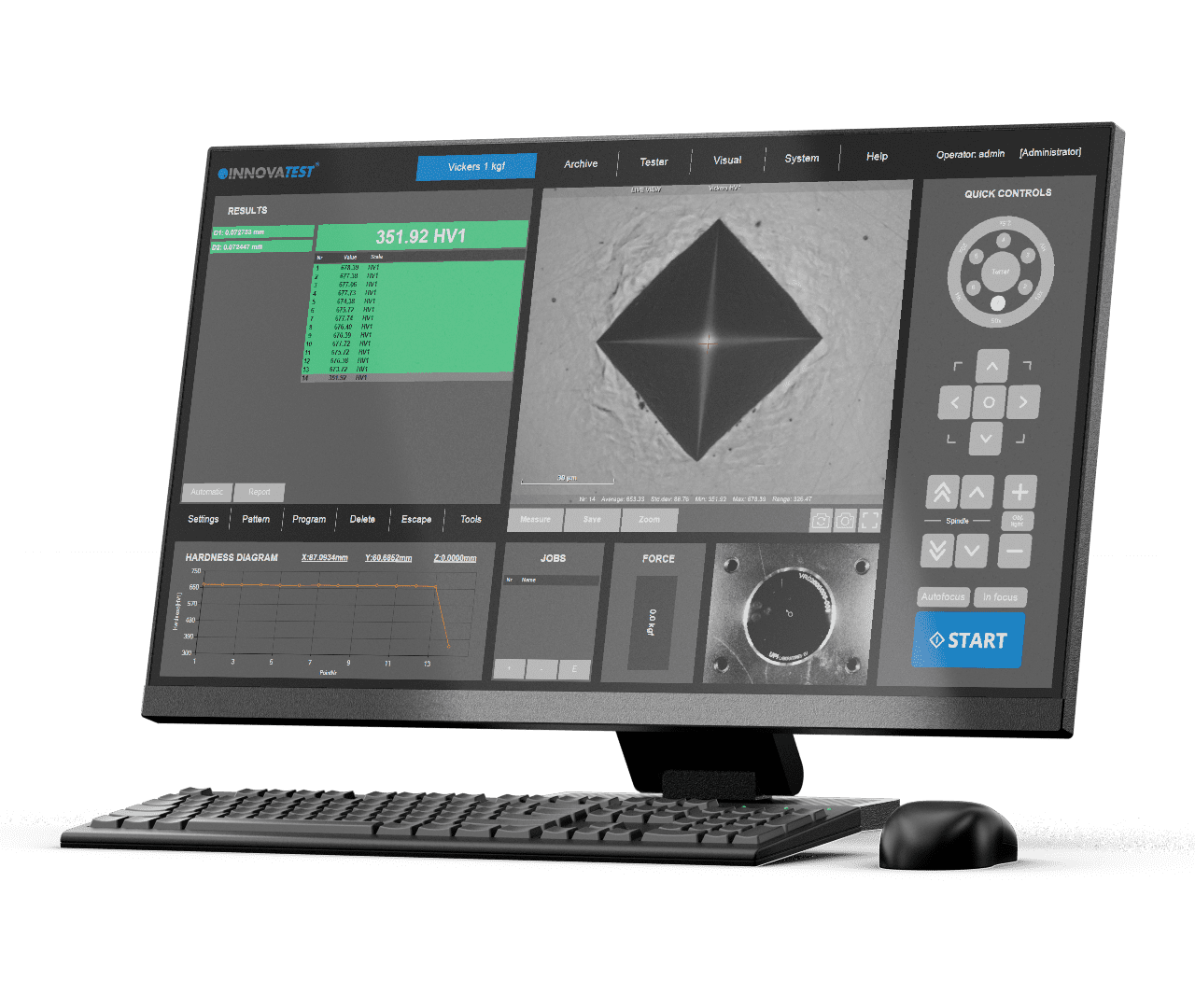
Manual positioning of filar lines is no longer required. IMPRESSIONS™ refined measurement algorithms detect indents even on very poor or scratched surfaces and measure the relevant indent dimensions according to standards. Stay in control by switching to manual measure mode and have the option of adjusting measurements by touching the screen or using the mouse.
Filar lines can be colored to give the best contrast against the specimen’s surface. To assure that measurements meet relevant standards on symmetry, enable the automatic indent check. All hardness values can be converted to other scales according to ISO 18265, ISO 50150, ASTM E140.
CHD, SHD & NHD Configurator for Automated Case Depth Hardness Testing
The IMPRESSIONS™ CHD, SHD & NHD Configurator is a specialized software module developed for fast, accurate, and fully automated Case Hardening Depth (CHD), Surface Hardening Depth (SHD), and Nitrided Hardness Depth (NHD) testing.
For laboratories performing routine case depth hardness testing on heat-treated components, this module significantly improves setup speed, testing consistency, and reporting efficiency—while ensuring full compliance with international hardness testing standards.
By combining automatic edge detection, pattern editor automation, and standards-based test spacing, IMPRESSIONS™ transforms traditional manual hardness traverses into a high-efficiency, repeatable, and audit-ready testing process.
This is the ideal solution for manufacturers performing batch hardness testing, high throughput hardness testing, and automated quality control across Rockwell, Vickers, and microhardness applications.
What is CHD, SHD and NHD Testing?
Case depth hardness testing is used to determine the effective depth of hardened layers created by heat treatment processes such as carburizing, induction hardening, nitriding, flame hardening, and surface hardening.
These hardness depth measurements are critical for verifying that components meet mechanical performance requirements such as wear resistance, fatigue strength, and long-term durability.
Case Hardening Depth (CHD) measures the depth at which hardness falls to a specified limit below the hardened surface. It is commonly used for carburized steels and case-hardened components.
Surface Hardening Depth (SHD) is used for induction hardened and flame hardened materials where the hardened surface layer must be verified.
Nitrided Hardness Depth (NHD) measures the effective hardened layer produced during nitriding and often includes additional core hardness verification points.
These testing methods are essential in industries where hardened surfaces directly influence product reliability and service life.
Fully Automated CHD Testing Using Pattern Editor and Edge Detection
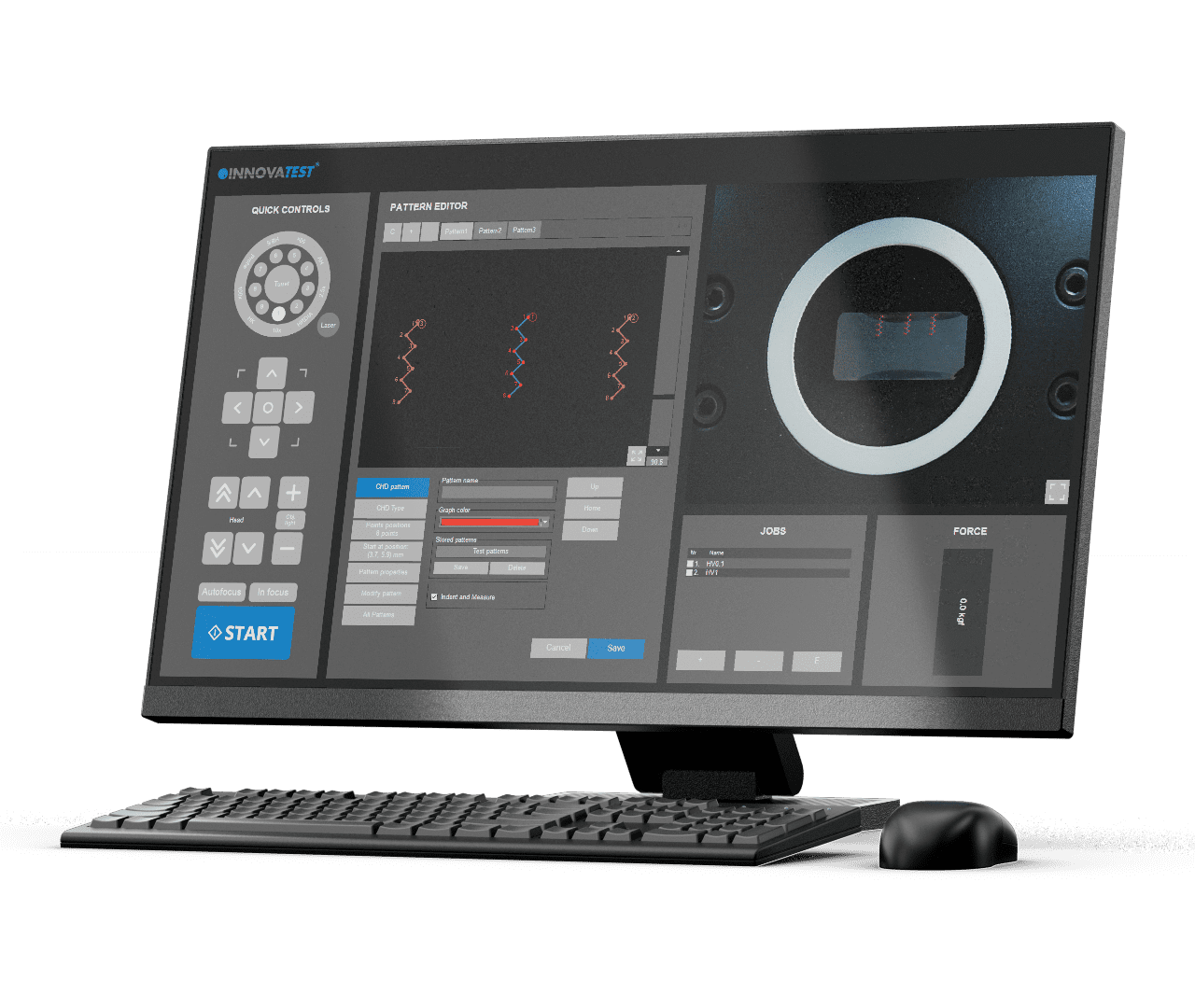
Manual CHD testing is often time-consuming and highly dependent on operator experience. IMPRESSIONS™ automates the entire process using the Pattern Editor combined with Automatic Edge Detection.
This improves repeatability, eliminates setup errors, and dramatically increases laboratory throughput.
For customers performing routine case depth analysis, this automation is one of the strongest productivity improvements available.
Standards-Based Automatic Test Point Spacing
Correct indentation spacing is critical for valid case depth hardness testing.
The IMPRESSIONS™ CHD Configurator automatically applies the correct minimum spacing between hardness test points according to the applicable standards.
This removes manual calculation errors and ensures full compliance with customer and audit requirements.
High Throughput Testing with Smart Automation Features
The CHD, SHD & NHD Configurator is designed specifically for high throughput hardness testing laboratories.
Complete All Indentations – Then Evaluate
This mode allows the system to complete the full hardness traverse first and evaluate the results afterward, maximizing speed and minimizing interruptions.
Auto-Stop Function
The software automatically stops the test sequence as soon as the lower hardness limit has been reached.
This prevents unnecessary indentations, saves operator time, and improves testing efficiency—especially during repetitive batch hardness testing.
These automation features make CHD testing faster without compromising standards compliance.
Enhanced Report Generator for CHD, SHD and NHD Testing
The IMPRESSIONS™ Report Generator includes dedicated report templates specifically for case depth hardness testing.
Reports can include:
This creates professional, audit-ready documentation fully aligned with quality control systems and customer specifications.
Applications of Case Depth Hardness Testing
CHD, SHD and NHD testing are essential in industries where heat treatment quality directly affects product performance.
Automotive Industry
Aerospace Industry
Tooling and Manufacturing
Fastener Production
Energy and Heavy Industry
In all these industries, reliable case hardening depth testing is essential for product safety, durability, and certification.
Automated vs Manual Case Depth Hardness Testing
Traditional manual CHD testing can be slow, inconsistent, and heavily dependent on operator skill.
IMPRESSIONS™ provides a major operational advantage.
Manual CHD Testing Limitations
IMPRESSIONS™ CHD Configurator Advantages
This transforms one of the most common hardness testing procedures into a highly efficient automated workflow.
Increase Throughput Without Compromising Standards
The most important question for every quality laboratory is:
How do you increase throughput while maintaining full standards compliance?
The answer is automation.
By combining intelligent setup, automatic test execution, standards-based spacing, and dedicated reporting, the IMPRESSIONS™ CHD, SHD & NHD Configurator delivers:
The result is a complete solution for modern automated case depth hardness testing—built for speed, precision, and reliability.
Automated Weld Hardness Testing According to ISO 9015
The IMPRESSIONS™ Weld Hardness Inspection Module is a specialized software tool developed for fully automated weld hardness testing according to ISO 9015.
This advanced application is specifically designed for hardness testing of welded joints, weld seams, and welded components, allowing users to perform precise and repeatable hardness measurements across the weld zone, heat-affected zone (HAZ), and base material.
By combining automated pattern setup, predefined ISO-compliant test positions, intelligent point correlation, and enhanced reporting, the system delivers fast, reliable, and fully standards-compliant weld hardness inspection for modern quality control laboratories.
This is an essential solution for manufacturers performing weld qualification, heat treatment verification, failure analysis, and production quality assurance.
Automated Testing for Weld Zones, HAZ and Base Material
ISO 9015 requires hardness testing to be performed across multiple critical zones of a welded component to verify the mechanical integrity of the weld.
The IMPRESSIONS™ module simplifies this process by enabling:
This ensures accurate and consistent hardness profiling across the complete weld cross-section.
Standards-Compliant Testing According to ISO 9015
The software is fully configured to perform weld hardness testing according to ISO 9015, the international standard covering destructive tests on welds in metallic materials.
This includes:
Using predefined templates and automated workflows aligned with ISO 9015, the system reduces setup time and eliminates operator uncertainty.
This is especially valuable for laboratories performing frequent weld qualification and certification testing.
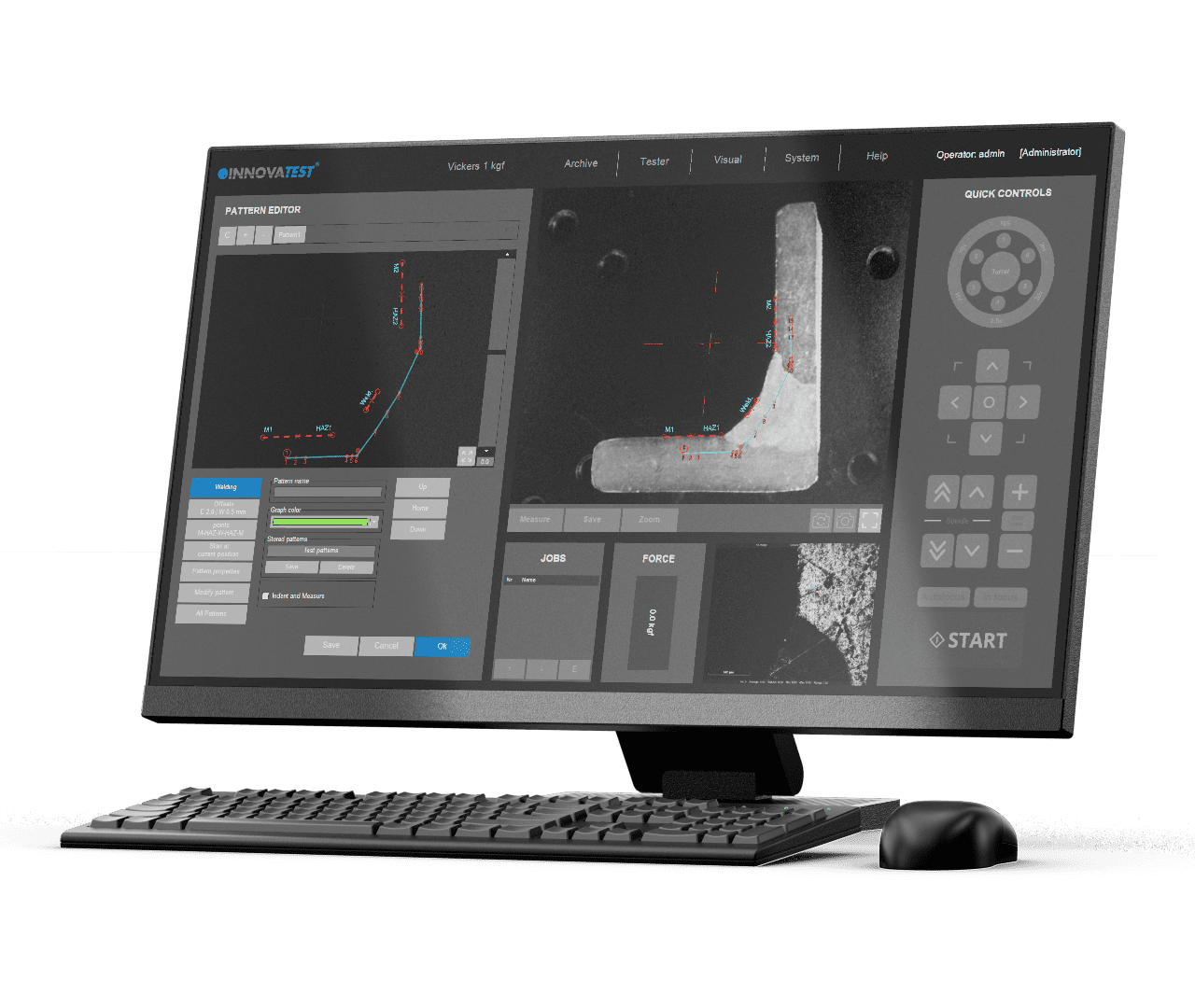
Automated Pattern Setup for Faster Weld Inspection
Manual weld hardness testing setup can be complex and time-consuming, especially when precise positioning is required across multiple weld zones.
The IMPRESSIONS™ Weld Hardness Module makes setup simple by using:
This allows operators to perform complex weld hardness traverses quickly and with high confidence.
The result is faster testing, stronger repeatability, and reduced operator dependency.
Embedded Calculations and Hardness Profile Evaluation
The software automatically manages the full weld hardness test sequence and provides clear evaluation of the hardness profile across the weld.
A typical weld hardness traverse compares values across multiple zones:
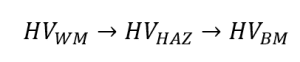
Where:
This allows fast identification of:
The system ensures consistent interpretation and repeatable results across all weld inspections.
Enhanced Reporting for ISO 9015 Compliance
The IMPRESSIONS™ Report Generator includes dedicated reporting templates specifically for weld hardness testing according to ISO 9015.
Reports can include:
This creates professional, audit-ready reports for certification, customer approval, and production quality assurance.
Applications of Automated Weld Hardness Testing
This module is essential for industries where weld integrity directly affects safety, compliance, and long-term performance.
Typical industries include:
Oil & Gas
Aerospace
Automotive
Heavy Industry
Energy Sector
In all these industries, accurate weld hardness testing is critical for preventing failure and ensuring compliance.
Automated vs Manual Weld Hardness Testing
Traditional manual weld hardness testing can be slow, difficult to position accurately, and highly dependent on operator skill.
IMPRESSIONS™ provides a far more efficient solution.
Manual Testing Limitations
IMPRESSIONS™ ISO 9015 Module Advantages
This transforms a complex weld qualification procedure into a fast, repeatable, and highly reliable automated workflow.
Precision Weld Quality Control for Modern Manufacturing
By combining automated test setup, embedded ISO standards, and advanced reporting tools, the IMPRESSIONS™ Weld Hardness Inspection Module provides a complete solution for weld quality assurance.
The result is faster inspections, stronger compliance, improved traceability, and greater confidence in every welded component—making it an essential tool for modern manufacturing, certification laboratories, and advanced production environments.
Automated Hardness Testing of Ammunition Shells and Casings
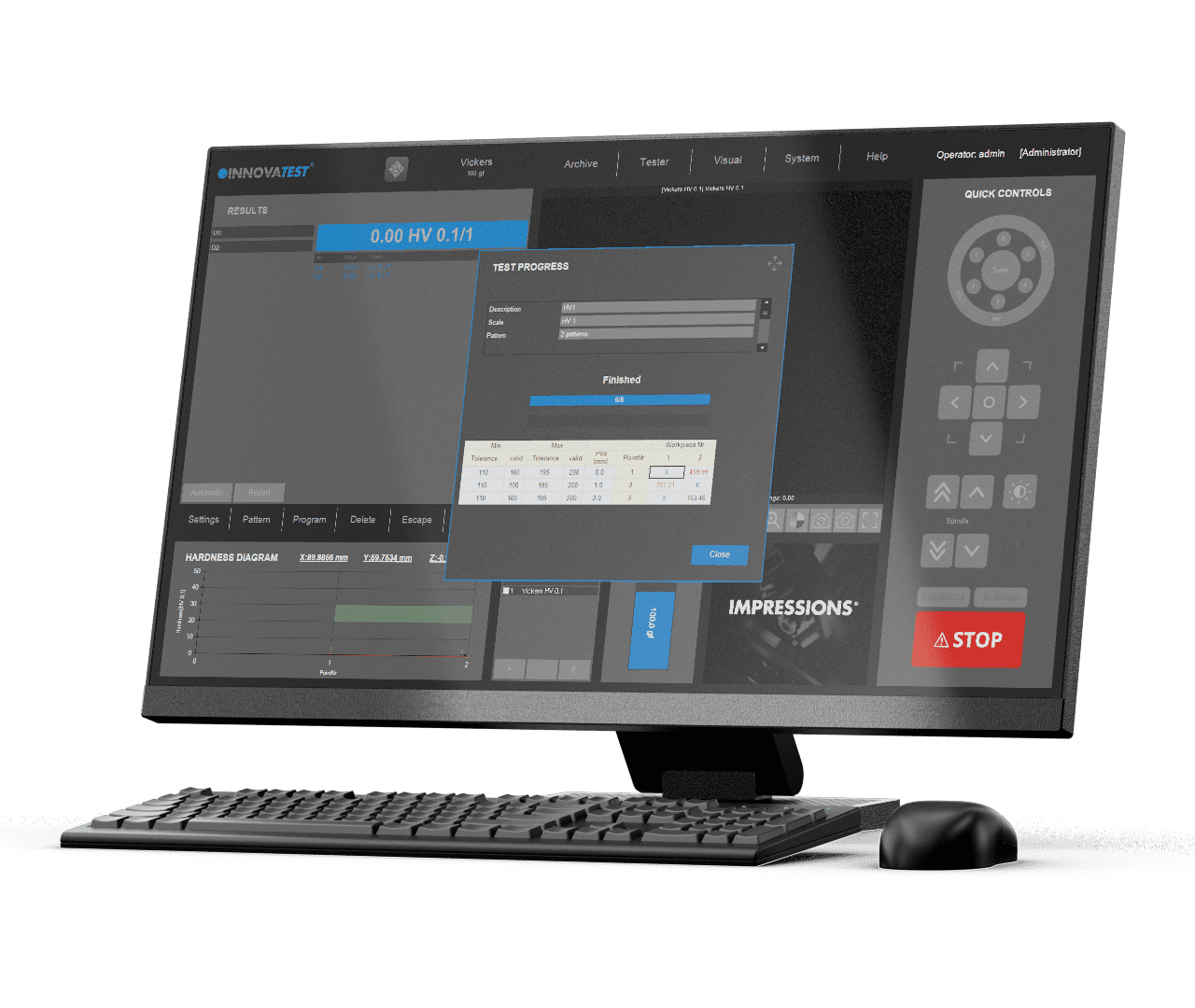
The IMPRESSIONS™ Ammunition Pattern Testing Module is a specialized software solution developed for fully automated hardness testing of ammunition shells, cartridge cases, and casings used in defense, aerospace, and precision manufacturing industries.
Developed in close cooperation with leading ammunition manufacturers, this application enables precise and repeatable hardness testing of both single and multiple shell or casing samples, fully aligned with the strict quality requirements of the industry.
By combining automated pattern setup, multi-point testing, statistical evaluation, and enhanced reporting, the system delivers reliable quality control for one of the most demanding applications in hardness testing.
Automated Testing for Single and Multiple Shells
Ammunition shell and casing hardness testing requires highly accurate and repeatable measurements across multiple zones to verify proper material performance and forming characteristics.
The IMPRESSIONS™ module simplifies this process by enabling:
This ensures consistent testing quality while significantly improving laboratory throughput.
Optimized for Industry-Specific Hardness Requirements
Ammunition components require carefully controlled hardness values to ensure correct forming, structural integrity, pressure resistance, and long-term reliability.
The software supports:
This is critical for maintaining both production quality and product safety.
Intelligent Pattern-Based Testing for High Throughput Inspection
Manual hardness testing of ammunition shells can be slow and difficult due to curved geometries and high production volumes.
The IMPRESSIONS™ Ammunition Pattern Testing Module uses advanced pattern automation to improve efficiency.
This allows manufacturers to perform high throughput hardness testing with greater speed and repeatability.
Go / No-Go Evaluation and Statistical Quality Control
The software automatically evaluates hardness results and provides clear pass/fail indicators for fast decision-making.
Reports include:
This allows rapid identification of non-conforming parts and supports stronger production quality assurance.
Advanced Remeasurement Settings for Quality Assurance
For critical applications, the module includes sophisticated remeasurement logic to ensure maximum reliability.
This provides additional security for customers working under strict military, aerospace, and defense specifications.
Enhanced Reporting for Ammunition Hardness Testing
The IMPRESSIONS™ Report Generator includes dedicated reporting functionality for ammunition shell and casing inspection.
Reports can include:
This creates professional, audit-ready documentation for both internal quality control and customer compliance requirements.
Applications of Ammunition Pattern Testing
This module is essential for manufacturers and laboratories involved in the production and verification of precision-formed metal casings.
Typical applications include:
Defense Industry
Aerospace and Defense Suppliers
Industrial Forming Applications
In all these industries, hardness consistency directly impacts safety, performance, and compliance.
Automated vs Manual Shell Hardness Testing
Traditional manual hardness testing of shells and casings can be difficult due to curved surfaces, complex positioning, and high production volumes.
IMPRESSIONS™ provides a far more efficient solution.
Manual Testing Limitations
IMPRESSIONS™ Ammunition Module Advantages
This transforms a highly specialized quality control process into a fast, repeatable, and highly reliable automated workflow.
Precision Hardness Testing for Critical Applications
By combining automated testing, intelligent pattern recognition, advanced statistics, and professional reporting, the IMPRESSIONS™ Ammunition Pattern Testing Module provides a complete solution for shell and casing quality assurance.
The result is faster inspections, stronger compliance, improved production control, and greater confidence in every tested component—making it an essential tool for modern ammunition manufacturing and precision forming industries.
Q-DAS Software Integration for Advanced Hardness Testing Data Management
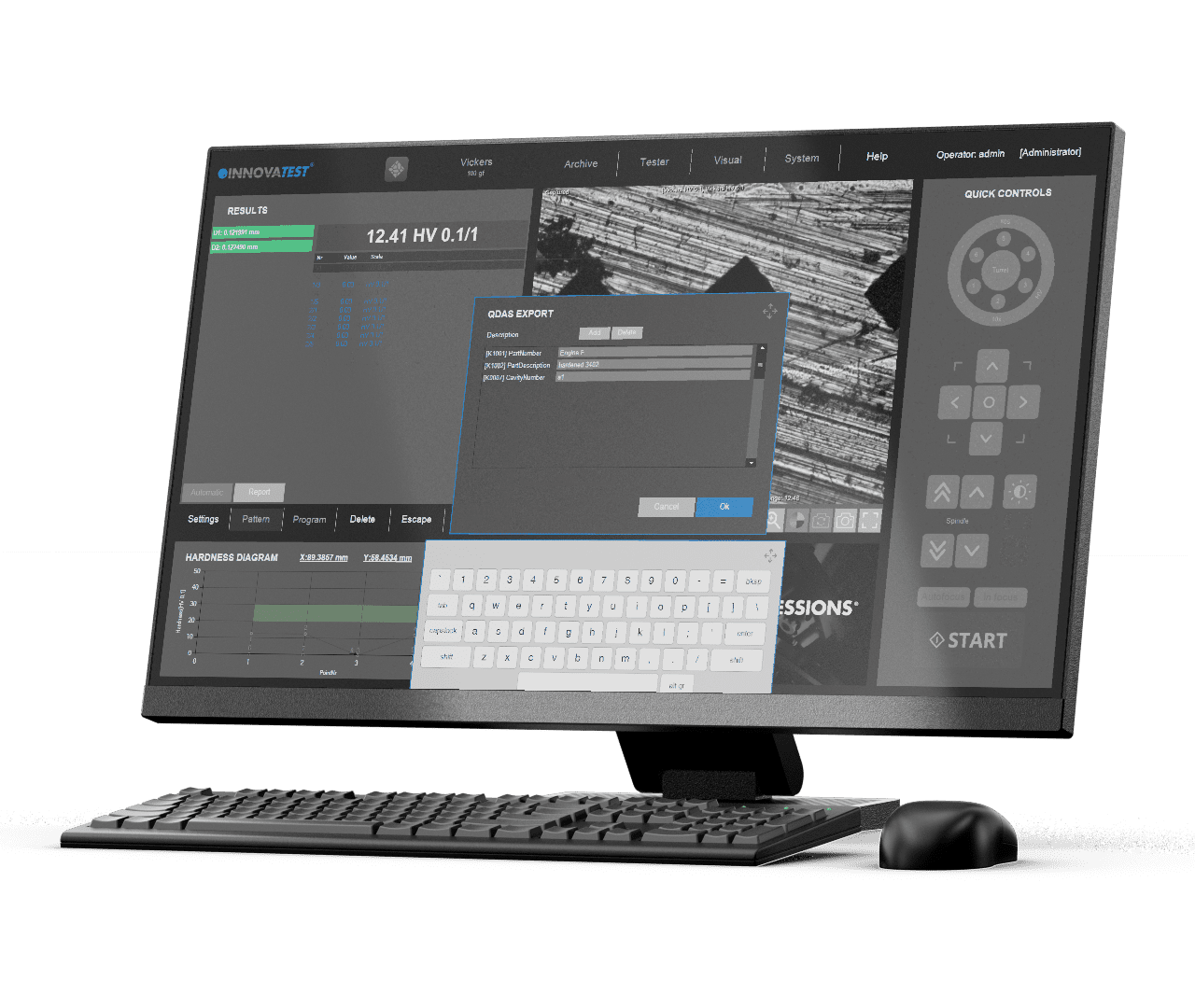
The IMPRESSIONS™ Q-DAS Software Integration Module provides seamless connectivity between your hardness testing system and external quality management platforms, enabling fully integrated quality control, process monitoring, and statistical analysis across modern production environments.
Designed for Rockwell, Brinell, and Vickers hardness testing, this module supports direct communication with Q-DAS, ERP systems, MES platforms, robotic systems, and other third-party quality evaluation software.
With full bi-directional data exchange, customers gain complete control over testing workflows, automated reporting, and centralized quality assurance—all while improving traceability and production efficiency.
Bi-Directional Data Communication for Smart Manufacturing
Modern production environments require more than isolated hardness testing—they require connected systems.
The IMPRESSIONS™ Q-DAS Integration Module provides:
This transforms your hardness tester from a standalone machine into a fully connected quality control station.
Direct Integration with Q-DAS Quality Management Systems
Q-DAS is widely used for Statistical Process Control (SPC), quality assurance, and production monitoring across manufacturing industries.
IMPRESSIONS™ supports direct integration with Q-DAS by enabling:
This ensures that hardness testing data becomes part of your broader quality management strategy.
Remote Hardness Tester Control and Automation
The system supports remote tester operation, allowing external systems to initiate, manage, and monitor testing procedures.
This includes support for:
This is especially valuable for customers operating high throughput testing, automated batch hardness testing, and unmanned production environments.
Flexible Data Export for Third-Party Software
Different customers require different output formats and integration methods.
The Q-DAS module supports flexible export options including:
This ensures compatibility with both standard and customer-specific quality systems.
If your required format is not standard, our engineering team provides bespoke integration solutions tailored to your production environment.
Improved Traceability and Statistical Process Control
By integrating hardness testing directly into your quality management system, customers gain stronger process control and faster decision-making.
Benefits include:
This helps manufacturers reduce scrap, improve consistency, and strengthen customer confidence.
Applications of Q-DAS Integration
Q-DAS integration is essential in industries where data-driven quality assurance is critical.
Typical applications include:
Automotive Industry
Aerospace Industry
Fastener Manufacturing
Tooling and Heat Treatment
Heavy Industry and Energy
In all these sectors, connected hardness testing improves both efficiency and compliance.
Automated vs Manual Data Handling
Traditional manual reporting and isolated hardness testing systems create inefficiencies and increase the risk of data errors.
IMPRESSIONS™ offers a far more advanced solution.
Manual Data Handling Limitations
IMPRESSIONS™ Q-DAS Integration Advantages
This transforms hardness testing into a fully connected and intelligent production process.
Built for Industry 4.0 and Future-Proof Quality Control
As manufacturing moves toward full digitalization, connected testing systems are no longer optional—they are essential.
The IMPRESSIONS™ Q-DAS Software Integration Module delivers the automation, connectivity, and data integrity required for modern production environments.
The result is faster reporting, stronger statistical control, better compliance, and a future-ready hardness testing workflow built for smart manufacturing.